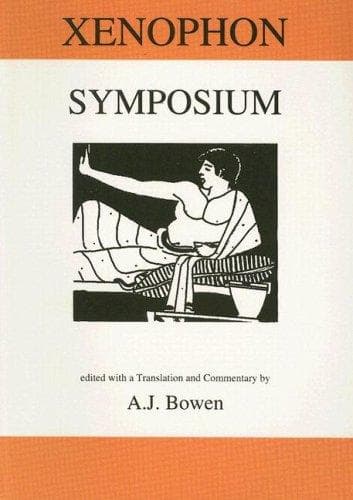
Classical literature; Philosophy, Ancient; Socrates, 470 BC-399 BC
Hitherto, no doubt (retorted Callias), although I had plenty of wise
things to say, I have kept my wisdom to myself; but if only you will
honour me with your company to-day, I promise to present myself in quite
another light; you will see I am a person of no mean consideration after
all. (19)
(19) Or, "I will prove to you that I am worthy of infinite respect."
Socrates and the others, while thanking Callias politely for the
invitation, were not disposed at first to join the dinner party; but the
annoyance of the other so to be put off was so obvious that in the end
the party were persuaded to accompany their host.
After an interval devoted to gymnastic exercise (and subsequent
anointing of the limbs) by some, whilst others of them took a bath, the
guests were severally presented to the master of the house.
Autolycus was seated next his father, as was natural, (20) while the
rest reclined on couches. Noting the scene presented, the first idea to
strike the mind of any one must certainly have been that beauty has
by nature something regal in it; and the more so, if it chance to
be combined (as now in the person of Autolycus) with modesty and
self-respect. Even as when a splendid object blazes forth at night, the
eyes of men are riveted, (21) so now the beauty of Autolycus drew on him
the gaze of all; nor was there one of those onlookers but was stirred
to his soul's depth by him who sat there. (22) Some fell into unwonted
silence, while the gestures of the rest were equally significant.
(20) Al. "Autolycus found a seat beside his father, while the rest
reclined on couches in the usual fashion." See Schneider's note.
(21) Passage imitated by Max. Tyr. "Or." xxiv. 4.
(22) Cf. Plat. "Charm." 154.
It seems the look betokening divine possession, no matter who the god,
must ever be remarkable. Only, whilst the subject of each commoner
emotion passion-whirled may be distinguished by flashings of the eye, by
terror-striking tones of voice, and by the vehement fervour of the man's
whole being, so he who is inspired by temperate and harmonious love (23)
will wear a look of kindlier welcome in his eyes; the words he utters
fall from his lips with softer intonation; and every gesture of his
bodily frame conform to what is truly frank and liberal. Such, at any
rate, the strange effects now wrought on Callias by love. He was like
one transformed, the cynosure of all initiated in the mysteries of this
divinity. (24)
(23) Cf. Plat. "Rep." iii. 403 A: "Whereas true love is a love of
beauty and order, temperate and harmonious."
(24) Cf. "Econ." xxi. 12.
Public-domain text, read in full here on John Shaqi.
Reviews
Reviews
No reviews yet
Be the first to share your thoughts on this work.
Join the Discussion
Join the discussion
Sign in to leave a comment or review.
Sign InorCreate an account