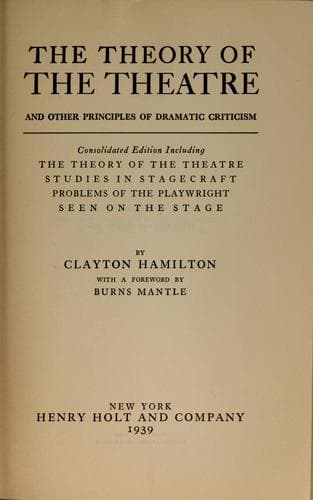
The Theory of the Theatre, and Other Principles of Dramatic CriticismHamilton, Clayton Meeker
History
The Theory of the Theatre, and Other Principles of Dramatic Criticism
Hamilton, Clayton Meeker
Drama -- History and criticism -- Theory, etc.; Theater
The journalist is limited by the necessity of catering to majorities; he
can never experience the felicity of Dr. Stockmann, who felt himself the
strongest man on earth because he stood most alone. It may sometimes happen
that the majority is right; but in that case the agreement of the
journalist is an unnecessary utterance. The truth was known before he
spoke, and his speaking is superfluous. What is popularly said about the
educative force of journalism is, for the most part, baseless. Education
occurs when a man is confronted with something true and beautiful and good
which stimulates to active life that "bright effluence of bright essence
increate" which dwells within him. The real ministers of education must be,
in Emerson's phrase, "lonely, original, and pure." But journalism is
popular instead of lonely, timely rather than original, and expedient
instead of pure. Even at its best, journalism remains an enterprise; but
literature at its best becomes no less than a religion.
These considerations are of service in studying what is written for the
theatre. In all periods, certain contributions to the drama have been
journalistic in motive and intention, while certain others have been
literary. There is a good deal of journalism in the comedies of
Aristophanes. He often chooses topics mainly for their timeliness, and
gathers and says what happens to be in the air. Many of the Elizabethan
dramatists, like Dekker and Heywood and Middleton for example, looked at
life with the journalistic eye. They collected and disseminated news. They
were, in their own time, much more "up to date" than Shakespeare, who chose
for his material old stories that nearly every one had read. Ben Jonson's
_Bartholomew Fair_ is glorified journalism. It brims over with
contemporary gossip and timely witticisms. Therefore it is out of date
to-day, and is read only by people who wish to find out certain facts of
London life in Jonson's time. _Hamlet_ in 1602 was not a novelty; but it is
still read and seen by people who wish to find out certain truths of life
in general.
Public-domain text, read in full here on John Shaqi.
Reviews
Reviews
No reviews yet
Be the first to share your thoughts on this work.
Elsewhere in the archive
Join the Discussion
Join the discussion
Sign in to leave a comment or review.
Sign InorCreate an account