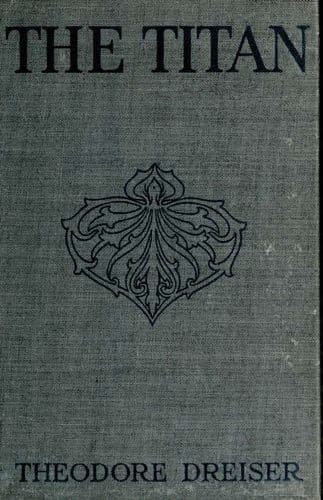
Capitalists and financiers -- Fiction; Chicago (Ill.) -- Fiction; Psychological fiction
In the first place, public interest in the idea of elevated roads was
increasing. They were a novelty, a factor in the life of New York; and
at this time rivalry with the great cosmopolitan heart was very keen in
the mind of the average Chicago citizen. Public sentiment in this
direction, however naive or unworthy, was nevertheless sufficient to
make any elevated road in Chicago popular for the time being. In the
second place, it so happened that because of this swelling tide of
municipal enthusiasm, this renaissance of the West, Chicago had finally
been chosen, at a date shortly preceding the present campaign, as the
favored city for an enormous international fair—quite the largest ever
given in America. Men such as Hand, Schryhart, Merrill, and Arneel, to
say nothing of the various newspaper publishers and editors, had been
enthusiastic supporters of the project, and in this Cowperwood had been
one with them. No sooner, however, had the award actually been granted
than Cowperwood’s enemies made it their first concern to utilize the
situation against him.
To begin with, the site of the fair, by aid of the new anti-Cowperwood
council, was located on the South Side, at the terminus of the
Schryhart line, thus making the whole city pay tribute to that
corporation. Simultaneously the thought suddenly dawned upon the
Schryhart faction that it would be an excellent stroke of business if
the New York elevated-road idea were now introduced into the city—not
so much with the purpose of making money immediately, but in order to
bring the hated magnate to an understanding that he had a formidable
rival which might invade the territory that he now monopolized,
curtailing his and thus making it advisable for him to close out his
holdings and depart. Bland and interesting were the conferences held by
Mr. Schryhart with Mr. Hand, and by Mr. Hand with Mr. Arneel on this
subject. Their plan as first outlined was to build an elevated road on
the South Side—south of the proposed fair-grounds—and once that was
popular—having previously secured franchises which would cover the
entire field, West, South, and North—to construct the others at their
leisure, and so to bid Mr. Cowperwood a sweet and smiling adieu.
Cowperwood, awaiting the assembling of the new city council one month
after election, did not propose to wait in peace and quiet until the
enemy should strike at him unprepared. Calling those familiar agents,
his corporation attorneys, around him, he was shortly informed of the
new elevated-road idea, and it gave him a real shock. Obviously Hand
and Schryhart were now in deadly earnest. At once he dictated a letter
to Mr. Gilgan asking him to call at his office. At the same time he
hurriedly adjured his advisers to use due diligence in discovering what
influences could be brought to bear on the new mayor, the honorable
Chaffee Thayer Sluss, to cause him to veto the ordinances in case they
came before him—to effect in him, indeed, a total change of heart.
Public-domain text, read in full here on John Shaqi.
Reviews
Reviews
No reviews yet
Be the first to share your thoughts on this work.
Elsewhere in the archive
Join the Discussion
Join the discussion
Sign in to leave a comment or review.
Sign InorCreate an account