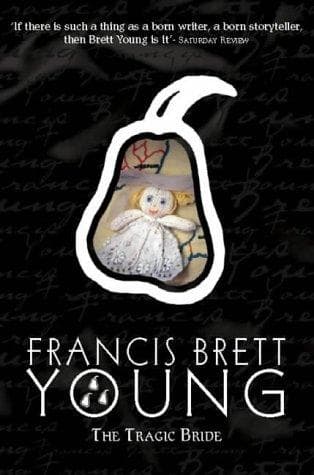
Man-woman relationships -- Fiction; Married women -- Fiction
herself but another Hewish woman staring out of the library windows on a
rough day in March a hundred years ago. And in this dream she would be
lost until the light died on the woods in a stormy sunset, and Considine
began to collect the papers in sheaves and lock them in the press.
By the time that spring appeared, Considine doing his best to put the
affairs of Roscarna in order, had realised the hopeless disorder in which
they were involved. In the whole of Jocelyn's tenure of the estate the
only stable period had been that of his bourgeois marriage. In youth he
had been wildly profligate, in old age negligent, in neither caring for
anything beyond his immediate needs. His tenants owed him thousands of
pounds that he had never attempted to recover, for he had found it easier
to borrow money on mortgage than exact it in rent. As a result of
Jocelyn's finance Considine found that Gabrielle's only hope of saving
anything from the ruined fortune lay in the sacrifice of Roscarna itself.
The property, hopelessly degenerated as an agricultural estate, had still
some value as a fishing or shooting box, and there was a chance that some
wealthy Englishman might buy it for that purpose. For a moment the idea
of selling Roscarna hurt her, but after a little thought she consented to
the sale. Considine advertised the opportunity in the English sporting
papers, but the only reply that came to him was a long and anxious letter
from Lord Halberton, who had been shocked to see the Irish branch of his
family reduced to selling their house and lands. His lordship offered to
come over in person and give Considine the benefit of his opinion.
Considine wrote very fully in reply, enclosing a balance-sheet that made
Lord Halberton sit up and rub his eyes. The business-like tone of
Considine's letter struck him very favourably; that sort of thing was so
rare in a parson. As a matter of fact he had already heard from the
Radways how tactfully Considine had managed the difficult situation of
their son's death.
It struck him that Considine was too good a man to be wasted in the wilds
of Ireland where the cause of tradition and aristocracy needed no
bolstering. A fellow who could wind up an estate as entangled as
Roscarna would be useful in the sphere of the Halberton territorial
influence. He talked the matter over with his wife, and in the end wrote
to Considine at some length, concurring in his wise determination to get
rid of Roscarna.
Public-domain text, read in full here on John Shaqi.
Reviews
Reviews
No reviews yet
Be the first to share your thoughts on this work.
Join the Discussion
Join the discussion
Sign in to leave a comment or review.
Sign InorCreate an account