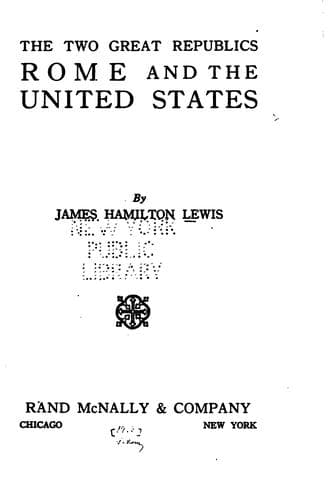
The Two Great Republics: Rome and the United StatesLewis, James
History
The Two Great Republics: Rome and the United States
Lewis, James
Rome -- Politics and government -- 510-30 B.C.; United States -- Politics and government
"It may be said, who will object to a decree against the
enemies of their country? The answer is obvious; time may
engender discontent; a future day may condemn the
proceeding; unforeseen events and even chance, that with
wild caprice perplexes human affairs, may give us reason to
repent. The punishment of traitors, however severe, cannot
be more than their flagitious deeds deserve; but it behooves
us, Conscript Fathers, to weigh well the consequences before
we proceed to judgment. Acts of state, that sprung from
policy, and were perhaps expedient on the spur of the
occasion, have grown into precedents often found to be of
evil tendency. The administration may fall into the hands of
ignorance and incapacity; and in that case, the measure,
which at first was just and proper, becomes by
misapplication to other men and other times the rule of bad
policy and injustice.
"It must be admitted that, in times like the present, when
Marcus Tullius Cicero conducts the administration, scenes of
that tragic nature are not to be apprehended. But in a large
populous city, when the minds of men are ever in agitation,
a variety of jarring opinions must prevail. At a future day
and under another consul, who may have an army at his back,
falsehood may appear in the garb of truth, and gain
universal credit. In such a juncture, should the consul,
encouraged by our example, and armed with the power by the
decree of the Senate, think proper to unsheath the sword,
who shall stop him in his career? who will be able to
appease his vengeance?...
"But you will say, What is the scope of this long argument?
Shall the conspirators be discharged, and suffered to
strengthen Catiline's army? Far from it; my advice is this;
let their estate and effects be confiscated; detain their
persons in separate prisons, and for that purpose choose the
strongest of the municipal towns; declare, by a positive
law, that no motion in their favor shall be brought forward
in the Senate, and that no appeal shall be made to the
people. Add to your decree, that whoever shall presume to
espouse the cause of the guilty shall be deemed an enemy to
the Commonwealth."
The year following the conspiracy of Catiline Cæsar secured the office
of prætor. By this time Cæsar had secured such a hold upon the popular
mind as to excite both the fear and hatred of the senatorial party.
This fear and hatred were manifested during Cæsar's year of office as
prætor by the Senate passing a decree depriving Cæsar and one of the
tribunes (Cæcilius Metellus Cepos) of their offices. Fear of popular
violence, however, soon induced the Senate to repeal this decree.
Public-domain text, read in full here on John Shaqi.
Reviews
Reviews
No reviews yet
Be the first to share your thoughts on this work.
Elsewhere in the archive
Join the Discussion
Join the discussion
Sign in to leave a comment or review.
Sign InorCreate an account