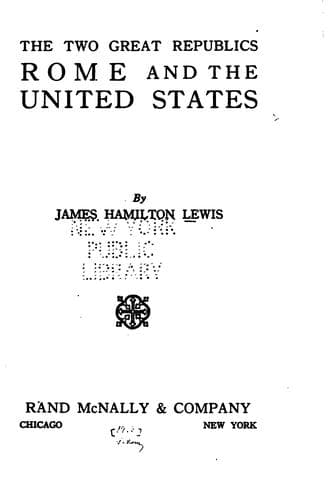
The Two Great Republics: Rome and the United StatesLewis, James
History
The Two Great Republics: Rome and the United States
Lewis, James
Rome -- Politics and government -- 510-30 B.C.; United States -- Politics and government
"The proscription being published, guards were forthwith
placed at the gates and all the avenues of the city, at the
seaports, and in the marshes, and in all places where there
was any likelihood an unhappy man might shelter himself;
besides, centurions were commanded abroad, to make search in
the country, which was done all at an instant; so that both
within and without the city many persons died suddenly
several kinds of deaths. The streets were filled with the
sad spectacle of heads carrying to the triumvirs, to receive
the reward; and every step some person of quality,
endeavoring to save himself, was met shamefully disguised;
some running down into wells, and others into privies; some
hiding themselves in the tops of the chimneys, or under the
tiles, where they durst not utter a sigh or a groan; for
they stood in more fear of their wives, or children, or
freedmen, or slaves, or debtors, or neighbours that coveted
some of their goods, than of the murderers themselves.
"All private grudges were now discovered; and it was a
strange change to see the prime men of the senate,
consulars, prætors, tribunes, or pretenders to these
dignities cast themselves at the feet of their slaves with
tears in their eyes, begging and caressing them, calling
them their saviours and patrons; and, which is most
deplorable, not to be able with all these submissions to
obtain the least favour. The most pernicious seditions and
cruellest of wars never had anything in them so terrible as
the calamities wherewith the city was now affrighted; for in
war and tumult none but enemies were feared, and domestics
were confided in; whereas now domestics were more dreaded
than enemies, because having no cause to fear for
themselves, as in war or tumult, from familiars they became
of a sudden persecutors; either out of a dissembled hate, or
out of the hope of recompense publicly proposed, or because
of some silver or gold hid in the house; so that no person
found himself secure in his house, servants being ordinarily
more sensible of profit than of the affection they owe to
their masters; and though some might be found faithful and
kind, yet they durst not assist a proscript, nor conceal
him, nor so much as stay with him, for fear of falling into
the same misfortune.
Public-domain text, read in full here on John Shaqi.
Reviews
Reviews
No reviews yet
Be the first to share your thoughts on this work.
Elsewhere in the archive
Join the Discussion
Join the discussion
Sign in to leave a comment or review.
Sign InorCreate an account