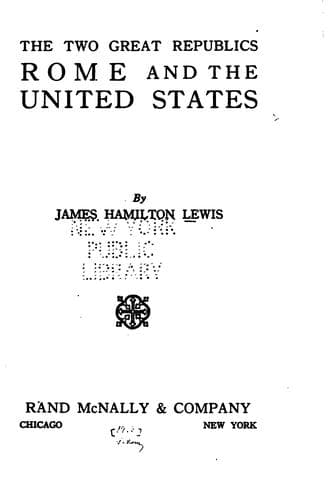
The Two Great Republics: Rome and the United StatesLewis, James
History
The Two Great Republics: Rome and the United States
Lewis, James
Rome -- Politics and government -- 510-30 B.C.; United States -- Politics and government
"There was now much more danger than when the seventeen
first proscribed were fallen upon; for then no person being
publicly proscribed when on a sudden they saw some killed,
one man defended another, for fear lest the same should
happen to him. But after the proscription was published
those comprised in it were presently forsaken by all the
world; some that thought themselves secure, having their
minds bent on profit, sought them to deliver them to the
murderers, that they might have the reward; others pillaged
the houses of those that had been killed, and with the
present gain comforted themselves against the public
misery.
"The most prudent and moderate, surprised at a thing so
extraordinary, stood like men astonished, considering that
other cities turmoiled with divisions were re-established by
the concord of their citizens; whereas the Romans, already
afflicted with civil dissensions, completed their ruin by
this reconciliation. Some were killed defending themselves;
others, who thought themselves not condemned, without any
defence; some let themselves die with hunger, or hanged, or
drowned themselves, or threw themselves headlong from the
tops of houses, or cast themselves into the fire, or ran to
meet their murderers; others again sought to protract the
time; and either hid themselves, or begged shamefully, or
fled, or offered money to save their lives. Many likewise
were slain contrary to the intention of the triumvirs,
either by mistake, or out of some particular grudge; but the
bodies of the proscripts might be known from the others,
because they wanted the head, which was cut off, and carried
before the tribunal for orations, where they paid the
reward. On the other side, wonderful examples were to be
seen of the affection of wives, children, brethren and
slaves; who found out a thousand inventions to save their
husbands, fathers, brethren, or masters; died with them when
they were discovered, or killed themselves upon those bodies
they were not able to defend.
Public-domain text, read in full here on John Shaqi.
Reviews
Reviews
No reviews yet
Be the first to share your thoughts on this work.
Elsewhere in the archive
Join the Discussion
Join the discussion
Sign in to leave a comment or review.
Sign InorCreate an account