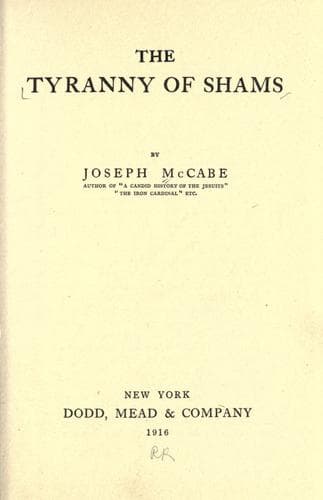
Great Britain -- Social conditions; Moral conditions; Social problems
That glorification of indolence which we call the principle of
_laissez-faire_ is so successful in this department of our public life
that what ought to be the State's chief concern is hardly ever
mentioned in our orgies of parliamentary debate. We peck at it
occasionally. We enact that babies must have orange-boxes, and that
children must not smoke cigarettes or approach within a certain number
of yards of a bar (so that we get bar-scenes outside the door); and
occasionally the representatives of rival sects get up a grand debate
on the Bible in the school. These things emphasise the general
neglect. _Laissez-faire_ meant originally, "Leave things as they
are"--it sounded better in French, but, like many ancient
sentiments, it was converted into a respectable philosophy: "The
State must leave as much as possible to the individual and the
amateur." Nineteenth-century Radicals fought heroically for this
Conservative principle.
Education, however, was so flagrantly neglected by the parent and the
Church that we had to compromise and take the child's mind out of
their care: leaving its body and character to the old hazards. At last
it dawns on us that a sound body and character are just as important
to the State as the capacity to read comic journals and stories: that
the entire being of the child needs expert training, and it is worth
the State's while to give it. This broad ideal of education is
increasingly accepted by pædagogists and social writers, and it is
already largely embodied in educational practice. It has provoked the
usual reaction, the usual determination that we will not allow our
ways to be reformed without a struggle. "Advanced" teachers fight
with Conservative teachers and politicians (particularly of the vestry
type), and the familiar old hymn-tunes are heard throughout the land.
We must not weaken parental responsibility: we must not lessen the
charm of the domestic circle: we must not encroach on the sphere of
the Church: we must beware of Socialism: we must resist the thin end
of the wedge wherever we see one.
Public-domain text, read in full here on John Shaqi.
Reviews
Reviews
No reviews yet
Be the first to share your thoughts on this work.
Elsewhere in the archive
Join the Discussion
Join the discussion
Sign in to leave a comment or review.
Sign InorCreate an account