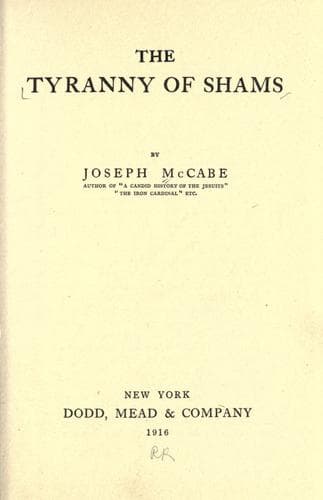
Great Britain -- Social conditions; Moral conditions; Social problems
Public museums were another device for educating the mass of the
people, and they have largely failed. There has been in recent years a
little more regard for the public, as well as for students, but it is
still painful to see crowds passing with bovine eyes amidst our
accumulated treasures. The grouping and labelling are still too
academic: the general scheme and the immense wealth of detail daze the
eye of the inexpert. More guides and lecturers, in touch with and
informally accessible to the public, and a closer association with
University Extension and Gilchrist and other lectures, are very much
needed. Saturday afternoon in the British Museum is a melancholy
spectacle of wasted wealth. A small model museum, designed solely for
the education of the general public, would be more useful in this
respect than our magnificent national museum. Unfortunately, the small
museums copy the academic defects of the larger. The curator of one,
on whom I urged the needs of the public, replied wearily: "Well, it
will take me three years to arrange my Cephalopods, and then I will
see what I can do."
We need a comprehensive and serious organisation and development of
our resources for educating the adult. Our Education Department needs
to throw out a new wing with the purpose of preventing the utter waste
of its work upon young children. Institutions like the British Museum
ought to be relieved of the control of the Archbishop of Canterbury
and one or two other somnolent gentlemen, and made the centre of a
splendid and energetic system of popular instruction and stimulation.
From such centres the educational officials (as distinct from learned
curators and youths from Oxford and Cambridge who look upon the public
as a nuisance) might issue attractive invitations and publications,
and be prepared to welcome the non-student, either with "showmen"
who understand the public mind or by a general and affable
accessibility of the whole staff. Municipal museums and libraries and
picture-galleries could be organised on similar lines by the
Department, and useful private foundations, such as the Bishopsgate
Institute, could be invited to co-operate, without interference in
their management. The supply of novels ought to be restricted to the
great masters of every country and a few moderns. The rich supply of
serious literature ought to be made attractive and easily accessible
to the public by good bibliographical guidance and constant lectures.
These things are, of course, being done. It is not so much the local
officials one quarrels with as the nation and its leaders. We want an
immense co-ordination and development of our resources and efforts out
of national funds. Lecture-societies and all kinds of educative
centres and institutes--there are thousands in the country--need to be
affiliated, encouraged, advised, and supplemented. The State should
not even shrink from publishing. The trade supplies only the actual
Public-domain text, read in full here on John Shaqi.
Reviews
Reviews
No reviews yet
Be the first to share your thoughts on this work.
Elsewhere in the archive
Join the Discussion
Join the discussion
Sign in to leave a comment or review.
Sign InorCreate an account