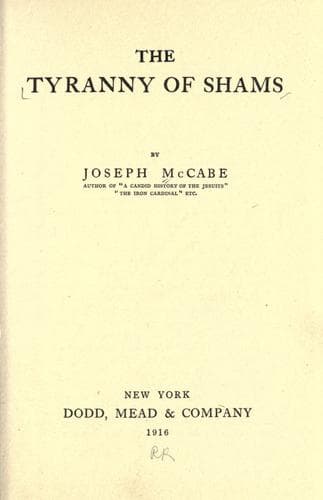
Great Britain -- Social conditions; Moral conditions; Social problems
One inquires how it is that a generation which boasts of its wisdom
and humanity can retain this worst survival of barbarism, and one
finds that the evil is connected with a dozen other evils and
protected by a general mental debility. The habit of tracing this
calamity to the peculiar criminality of another nation, and dwelling
only on our own heroism and self-sacrifice in meeting this menace, is
in itself a very grave danger. We may be entirely certain that, as
long as we retain the military machinery for settling quarrels, there
will be wars. How came the machinery to linger amongst us in the
twentieth century? At once we light upon a dozen other disorders of
our life. This remissness in civilising international intercourse
argues a grave indifference to a most important task on the part of
our political servants, and an equally grave absence of pressure and
direction on the part of their supporters. It reveals a dangerously
slovenly condition of our industrial world, a very serious defect in
our educational system, a standing menace in the encouraged
thoughtlessness of the mass of our people, a general flabbiness,
haziness, and anæmia of what may be called the intellectual part of
our public life.
This is true of all nations,--it may be the turn of the United States,
or Norway, or Argentina tomorrow,--but it is most seriously true of
England. Do not let us fuddle our minds with the kind of rhetoric one
addresses to schoolboys. We have, in the first year of the war,
betrayed a sluggishness, a lack of foresight and initiative, a
feebleness of organisation, which ought to sober any race, however
wealthy. Our Government knew, or ought to have known, since the spring
of 1912, that just this war was threatening us; and, when it occurred,
they made a virtue of the fact that we were "the least prepared
nation in Europe." They took nine months to begin to organise our
resources, or to perceive that it was necessary to do so. Plainly,
there is something profoundly, comprehensively wrong with our public
life. We shall "muddle through," because we have the resources,
and because the Allies outnumber their opponents by fifty per cent.
But if in a future war we are compelled to face a numerically equal
opponent, England will, if she retains these faults, see her royal
standard in the dust. As it is, the cost of our ineptitude will be
prodigious.
Public-domain text, read in full here on John Shaqi.
Reviews
Reviews
No reviews yet
Be the first to share your thoughts on this work.
Join the Discussion
Join the discussion
Sign in to leave a comment or review.
Sign InorCreate an account