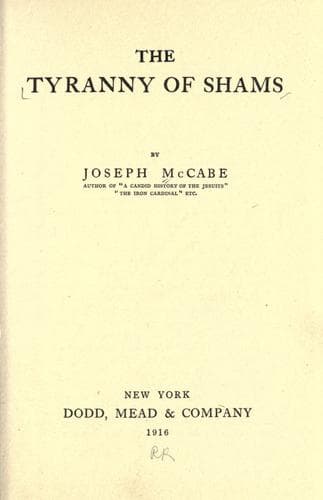
Great Britain -- Social conditions; Moral conditions; Social problems
Then there are the emigration societies. One fears that in large part
they transport to the colonies either the men whom the colonies do not
want, the men who will enlarge the slum-area of colonial cities, or
the men whom we ought not to spare. At the best, emigration is a means
of leaving the problem of poverty to our grandchildren, who will find
no more open spaces for the dumping of our human surplus. In point of
fact, however, apart from the dispatch of a small proportion of
specially prepared boys, emigration is not affecting our problem of
poverty. The half-million very poor of London, with the corresponding
hundreds of thousands in our other cities, do not make emigrants at
all; and very few of the next and far larger class are, or could be,
fit for agricultural deportation.
Lastly of these devices which the less thoughtful are apt to regard as
relieving poverty, we have the Salvation Army, which is quite the most
preposterous social sham of our age. But its religious-social
burlesque, its pretentious concealment of bad results and loud
proclamation of good results, its refusal to print a plain
balance-sheet from which a social student can measure the definite
good done and the cost of it, its undercutting of existing work, and
so on, have been sufficiently exposed to excuse us from dwelling on
it. It contains some earnest men and women, and has had undoubted
successes, but the system is too nebulous, garrulous, and wasteful to
merit serious attention.
Let us turn to graver matters. The mass of the workers, apart from the
more advanced bodies of Socialists and Syndicalists, believe that the
solution of the problem of poverty will be found in the development of
Trade Unions and of the political power of Labour. By political power,
with the aid of sympathetic members of the middle-class, they have won
the right of combination and a whole code of labour-laws; by an
increased political power, ultimately a political all-power, they will
secure all the legislation they deem expedient.
Public-domain text, read in full here on John Shaqi.
Reviews
Reviews
No reviews yet
Be the first to share your thoughts on this work.
Elsewhere in the archive
Join the Discussion
Join the discussion
Sign in to leave a comment or review.
Sign InorCreate an account