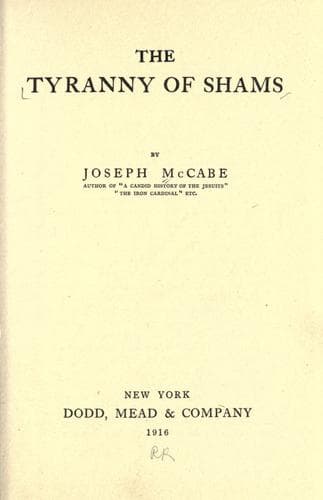
Great Britain -- Social conditions; Moral conditions; Social problems
In spite of the distraction of many of the workers by Anarchists and
Syndicalists, who despise political action, and in spite of the
restrictions of the franchise which are maintained by the older
political parties, it seems plain that at some not very remote date
the workers will control the world. Ever since the door of the
political world was opened to Demos, eighty years ago, he was certain
eventually to reach the throne, no matter how long he might be seduced
to tarry by the way. Those who think otherwise must put their trust in
the permanent unintelligence of the workers. The interests of the mass
of workers are so far identical that they must finally combine to
promote them. We are plainly moving, all over the world, in this
direction. In Australasia, where the virgin soil permitted an
exceptionally rapid growth, we see the farthest point yet reached, and
within a decade or so Labour will have unshakable power all over
Australia, at least. "Conservatism" has already disappeared, or
changed its name to "Liberalism." In Germany and France and
Belgium we see the same disposition of the rival parties to unite in
face of advancing Demos. In England there are signs that we shall at
no distant date see a similar redistribution of political forces, and
it is anticipated in the United States. In all countries the political
energies are slowly gathering about two poles: Liberal (including the
old Conservatives) and Labour. Even in such countries as Spain,
Russia, Turkey, Japan, and China the initial stages of the development
may be detected. When the workers at last unite and secure an absolute
majority-power, they will legislate on familiar lines. Wages will
rise, hours of labour will be shortened, and place will be found for
larger numbers of workers.
It is little use moralising on this change. It is coming on like the
tide. There will, no doubt, be temporary abuses of power, as there
have always been, but the workers will learn the vital needs of an
industrial order, and they will not starve the roots of their new
prosperity. Let us assume that a state of equilibrium has been
reached: that the workers have paramount political power, and wages
are considerably increased. Does this promise a solution of the
problem of poverty?
Public-domain text, read in full here on John Shaqi.
Reviews
Reviews
No reviews yet
Be the first to share your thoughts on this work.
Elsewhere in the archive
Join the Discussion
Join the discussion
Sign in to leave a comment or review.
Sign InorCreate an account