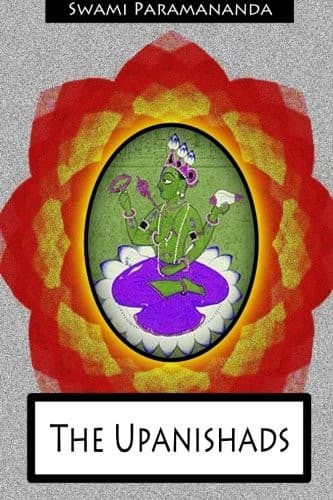
Mysticism -- Hinduism; Religion; Sanskrit literature -- Translations into English
This is the eternal call of the wise: Awake from the slumber of ignorance!
Arise and seek out those who know the Truth, because only those who have
direct vision of Truth are capable of teaching It. Invoke their blessing with
a humble spirit and seek to be instructed by them. The path is very difficult
to tread. No thoughtless or lethargic person can safely travel on it. One
must be strong, wakeful and persevering.
XV
Knowing That which is soundless, touchless, formless, undecaying;
also tasteless, odorless, and eternal; beginningless, endless and
immutable; beyond the Unmanifested: (knowing That) man escapes
from the mouth of death.
The Ruler of Death defines here the innermost essence of our being. Because
of its extreme subtlety, it cannot be heard or felt or smelled or tasted like
any ordinary object. It never dies. It has no beginning or end. It is
unchangeable. Realizing this Supreme Reality, man escapes from death and
attains everlasting life. Thus the Teacher has gradually led Nachiketas to a
point where he can reveal to him the secret of death. The boy had thought
that there was a place where he could stay and become immortal. But Yama
shows him that immortality is a state of consciousness and is not gained so
long as man clings to name and form, or to perishable objects. What dies?
Form. Therefore the formful man dies; but not that which dwells within.
Although inconceivably subtle, the Sages have always made an effort through
similies and analogies to give some idea of this inner Self or the God within.
They have described It as beyond mind and speech; too subtle for ordinary
perception, but not beyond the range of purified vision.
XVI
The intelligent man, who has heard and repeated the ancient story
of Nachiketas, told by the Ruler of Death, is glorified in the
world of Brahman.
XVII
He who with devotion recites this highest secret of immortality
before an assembly of Brahmanas (pious men) or at the time of
Shraddha (funeral ceremonies), gains everlasting reward, he gains
everlasting reward.
Part Fourth
I
The Self-existent created the senses out-going; for this reason
man sees the external, but not the inner Atman (Self). Some wise
man, however, desiring immortality, with eyes turned away (from
the external) sees the Atman within.
In the last chapter the Ruler of Death instructed Nachiketas regarding the
nature and glory of the Self. Now he shows the reason why the Self is not
seen by the majority. It is because man's mind is constantly drawn outward
through the channels of his senses, and this prevents his seeing the inner
Self (Pratyagatman); but now and then a seeker, wiser than others, goes within
and attains the vision of the undying Self.
II
Children (the ignorant) pursue external pleasures; (thus) they
fall into the wide- spread snare of death. But the wise, knowing
the nature of immortality, do not seek the permanent among
fleeting things.
Public-domain text, read in full here on John Shaqi.
Reviews
Reviews
No reviews yet
Be the first to share your thoughts on this work.
Join the Discussion
Join the discussion
Sign in to leave a comment or review.
Sign InorCreate an account