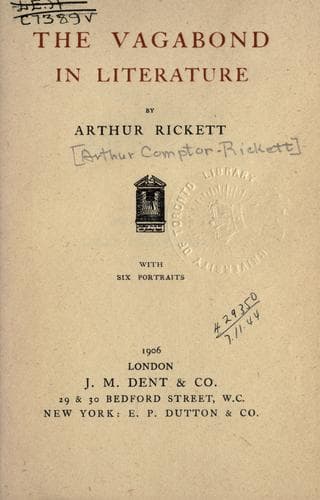
Bohemianism; English literature -- 19th century -- History and criticism
Mark the watchful impassiveness with which he gazes at the ugly side of
life.
“I sit and look out upon all the sorrows of the world, and upon all
oppression and shame;
I hear convulsive sobs from young men at anguish with themselves,
remorseful after deeds done;
* * * * *
I see the workings of battle, pestilence, tyranny;
I see martyrs and prisoners—
I observe a famine at sea—I observe the sailors casting lots who
shall be killed, to preserve the lives of the rest;
I observe the slights and degradations cast by arrogant persons upon
labourers, the poor, and upon negroes and the like;
All these—all the meanness and agony without end, I sit and look out
upon,
See, hear, and am silent.”
No one is too base, too degraded for Whitman’s affection. This is no
mere book sentiment with him; and many stories are told of his tenderness
and charity towards the “dregs of humanity.” That a man is a human being
is enough for Whitman. However he may have fallen there is something in
him to appeal to. He would have agreed with Browning that—
“Beneath the veriest ash there hides a spark of soul,
Which, quickened by Love’s breath, may yet pervade the whole
O’ the grey, and free again be fire; of worth the same
Howe’er produced, for great or little flame is flame.”
Like Browning, also, Whitman fears lassitude and indifference more than
the turmoil of passion. He glories in the elemental. At present he
thinks we are too fearful of coarseness and rankness, lay too much stress
on refinement. And so he delights in “unrefinement,” glories in the
woods, air-sweetness, sun-tan, brawn.
“_So long_!
I announce a life that shall be copious, vehement, spiritual bold,
And I announce an did age that shall lightly and joyfully meet its
translation.”
Cultured conventions, of which we make so much, distress him. They tend,
he argues, to enervation, to a poor imitative, self-conscious art, to an
artificial, morbid life.
His curative methods were heroic; but who can say that they were not
needed, or that they were mischievous?
Certainly in aiming first of all at sincerity he has attained that noble
beauty which is born of strength. Nature, as he saw, was full of vital
loveliness by reason of her very power. The average literary artist is
always seeking for the loveliness, aiming after beauty of form, without a
care whether what he is saying has the ring of sincerity and truth,
whether it is in touch with the realities of Nature. And in his
super-refinements he misses the beauty that flashes forth from the rough,
savage songs of Whitman.
Whitman does not decry culture. But he places first the educative
influence of Nature. “The best Culture,” he says, “will always be that
of the manly and courageous instincts and loving perception, and of
self-respect.”
Public-domain text, read in full here on John Shaqi.
Reviews
Reviews
No reviews yet
Be the first to share your thoughts on this work.
Elsewhere in the archive
Join the Discussion
Join the discussion
Sign in to leave a comment or review.
Sign InorCreate an account