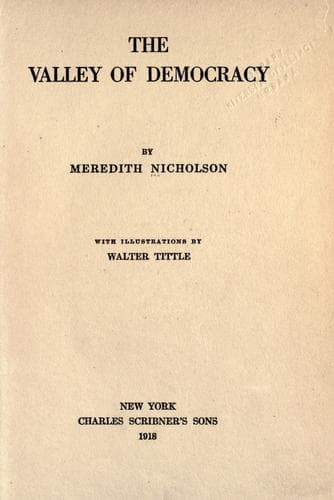
Mississippi River Valley -- Social life and customs
The West may be likened to a naughty boy in a hickory shirt and
overalls who enjoys pulling the chair from under his knickerbockered,
Eton-collared Eastern cousins. The West creates a new issue whenever
it pleases, and wearying of one plaything cheerfully seeks another. It
accepts the defeat of free silver and turns joyfully to prohibition,
flattering itself that its chief concern is with moral issues. It
wants to make the world a better place to live in and it believes in
abundant legislation to that end. It experiments by States, points with
pride to the results, and seeks to confer the priceless boon upon the
nation. Much of its lawmaking is shocking to Eastern conservatism, but
no inconsiderable number of Easterners hear the window-smashing and are
eager to try it at home.
To spank the West and send it supperless to bed is a very large order,
but I have conversed with gentlemen on the Eastern seaboard who feel
that this should be done. They go the length of saying that if this
chastisement is neglected the republic will perish. Of course, the
West doesn’t want the republic to perish; it honestly believes itself
preordained of all time to preserve the republic. It sits up o’ nights
to consider ways and means of insuring its preservation. It is very
serious and doesn’t at all like being chaffed about its hatred of Wall
Street and its anxiety to pin annoying tick-tacks on the windows of
ruthless corporations. It is going to get everything for the Folks
that it can, and it sees nothing improper in the idea of State-owned
elevators or of fixing by law the height of the heels on the slippers
of its emancipated women. It is in keeping with the cheery contentment
of the West that it believes that it has “at home” or can summon to its
R. F. D. box everything essential to human happiness.
Across this picture of ease, contentment, and complacency fell the
cloud of war. What I am attempting is a record of transition, and
I have set down the foregoing with a consciousness that our recent
yesterdays already seem remote; that many things that were true only a
few months ago are now less true, though it is none the less important
that we remember them. It is my hope that what I shall say of that
period to which we are even now referring as “before the war” may
serve to emphasize the sharpness of America’s new confrontations and
the yielding, for a time at least, of the pride of sectionalism to the
higher demands of nationality.
CHAPTER II
TYPES AND DIVERSIONS
Public-domain text, read in full here on John Shaqi.
Reviews
Reviews
No reviews yet
Be the first to share your thoughts on this work.
Join the Discussion
Join the discussion
Sign in to leave a comment or review.
Sign InorCreate an account