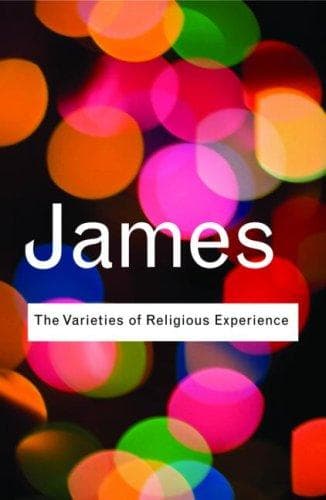
The Varieties of Religious Experience: A Study in Human NatureJames, William
ReligionComparative
The Varieties of Religious Experience: A Study in Human Nature
James, William
Conversion; Experience (Religion); Philosophy and religion; Psychology, Religious; Religion
“I am utterly weary of life. I pray the Lord will come forthwith
and carry me hence. Let him come, above all, with his last
Judgment: I will stretch out my neck, the thunder will burst
forth, and I shall be at rest.”—And having a necklace of white
agates in his hand at the time he added: “O God, grant that it may
come without delay. I would readily eat up this necklace to‐day,
for the Judgment to come to‐morrow.”—The Electress Dowager, one
day when Luther was dining with her, said to him: “Doctor, I wish
you may live forty years to come.” “Madam,” replied he, “rather
than live forty years more, I would give up my chance of
Paradise.”
Failure, then, failure! so the world stamps us at every turn. We strew it
with our blunders, our misdeeds, our lost opportunities, with all the
memorials of our inadequacy to our vocation. And with what a damning
emphasis does it then blot us out! No easy fine, no mere apology or formal
expiation, will satisfy the world’s demands, but every pound of flesh
exacted is soaked with all its blood. The subtlest forms of suffering
known to man are connected with the poisonous humiliations incidental to
these results.
And they are pivotal human experiences. A process so ubiquitous and
everlasting is evidently an integral part of life. “There is indeed one
element in human destiny,” Robert Louis Stevenson writes, “that not
blindness itself can controvert. Whatever else we are intended to do, we
are not intended to succeed; failure is the fate allotted.”(71) And our
nature being thus rooted in failure, is it any wonder that theologians
should have held it to be essential, and thought that only through the
personal experience of humiliation which it engenders the deeper sense of
life’s significance is reached?(72)
But this is only the first stage of the world‐sickness. Make the human
being’s sensitiveness a little greater, carry him a little farther over
the misery‐threshold, and the good quality of the successful moments
themselves when they occur is spoiled and vitiated. All natural goods
perish. Riches take wings; fame is a breath; love is a cheat; youth and
health and pleasure vanish. Can things whose end is always dust and
disappointment be the real goods which our souls require? Back of
everything is the great spectre of universal death, the all‐encompassing
blackness:—
Public-domain text, read in full here on John Shaqi.
Reviews
Reviews
No reviews yet
Be the first to share your thoughts on this work.
Elsewhere in the archive
Join the Discussion
Join the discussion
Sign in to leave a comment or review.
Sign InorCreate an account