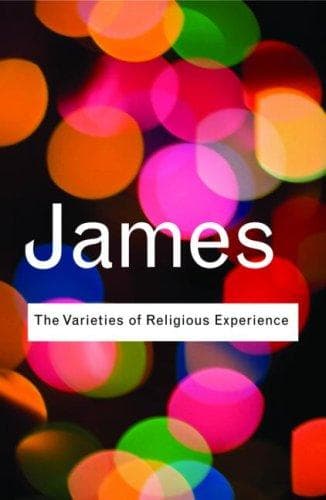
The Varieties of Religious Experience: A Study in Human NatureJames, William
ReligionComparative
The Varieties of Religious Experience: A Study in Human Nature
James, William
Conversion; Experience (Religion); Philosophy and religion; Psychology, Religious; Religion
“What profit hath a man of all his labour which he taketh under
the Sun? I looked on all the works that my hands had wrought, and
behold, all was vanity and vexation of spirit. For that which
befalleth the sons of men befalleth beasts; as the one dieth, so
dieth the other; all are of the dust, and all turn to dust
again.... The dead know not anything, neither have they any more a
reward; for the memory of them is forgotten. Also their love and
their hatred and their envy is now perished; neither have they any
more a portion for ever in anything that is done under the Sun....
Truly the light is sweet, and a pleasant thing it is for the eyes
to behold the Sun: but if a man live many years and rejoice in
them all, yet let him remember the days of darkness; for they
shall be many.”
In short, life and its negation are beaten up inextricably together. But
if the life be good, the negation of it must be bad. Yet the two are
equally essential facts of existence; and all natural happiness thus seems
infected with a contradiction. The breath of the sepulchre surrounds it.
To a mind attentive to this state of things and rightly subject to the
joy‐destroying chill which such a contemplation engenders, the only relief
that healthy‐mindedness can give is by saying: “Stuff and nonsense, get
out into the open air!” or “Cheer up, old fellow, you’ll be all right
erelong, if you will only drop your morbidness!” But in all seriousness,
can such bald animal talk as that be treated as a rational answer? To
ascribe religious value to mere happy‐go‐lucky contentment with one’s
brief chance at natural good is but the very consecration of forgetfulness
and superficiality. Our troubles lie indeed too deep for _that_ cure. The
fact that we _can_ die, that we _can_ be ill at all, is what perplexes us;
the fact that we now for a moment live and are well is irrelevant to that
perplexity. We need a life not correlated with death, a health not liable
to illness, a kind of good that will not perish, a good in fact that flies
beyond the Goods of nature.
It all depends on how sensitive the soul may become to discords. “The
trouble with me is that I believe too much in common happiness and
goodness,” said a friend of mine whose consciousness was of this sort,
“and nothing can console me for their transiency. I am appalled and
disconcerted at its being possible.” And so with most of us: a little
cooling down of animal excitability and instinct, a little loss of animal
toughness, a little irritable weakness and descent of the pain‐threshold,
will bring the worm at the core of all our usual springs of delight into
full view, and turn us into melancholy metaphysicians. The pride of life
and glory of the world will shrivel. It is after all but the standing
quarrel of hot youth and hoary eld. Old age has the last word: the purely
naturalistic look at life, however enthusiastically it may begin, is sure
to end in sadness.
Public-domain text, read in full here on John Shaqi.
Reviews
Reviews
No reviews yet
Be the first to share your thoughts on this work.
Elsewhere in the archive
Join the Discussion
Join the discussion
Sign in to leave a comment or review.
Sign InorCreate an account