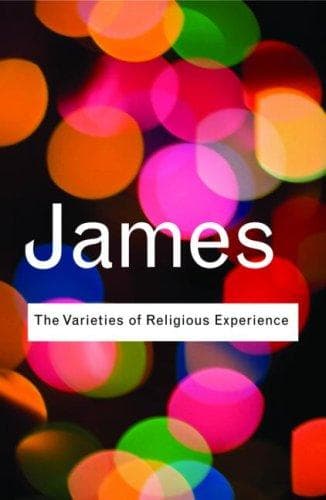
The Varieties of Religious Experience: A Study in Human NatureJames, William
ReligionComparative
The Varieties of Religious Experience: A Study in Human Nature
James, William
Conversion; Experience (Religion); Philosophy and religion; Psychology, Religious; Religion
either of the flesh or of the spirit; and the spirit bloweth where it
listeth; and the world’s materials lend their surface passively to all the
gifts alike, as the stage‐setting receives indifferently whatever
alternating colored lights may be shed upon it from the optical apparatus
in the gallery.
Meanwhile the practically real world for each one of us, the effective
world of the individual, is the compound world, the physical facts and
emotional values in indistinguishable combination. Withdraw or pervert
either factor of this complex resultant, and the kind of experience we
call pathological ensues.
In Tolstoy’s case the sense that life had any meaning whatever was for a
time wholly withdrawn. The result was a transformation in the whole
expression of reality. When we come to study the phenomenon of conversion
or religious regeneration, we shall see that a not infrequent consequence
of the change operated in the subject is a transfiguration of the face of
nature in his eyes. A new heaven seems to shine upon a new earth. In
melancholiacs there is usually a similar change, only it is in the reverse
direction. The world now looks remote, strange, sinister, uncanny. Its
color is gone, its breath is cold, there is no speculation in the eyes it
glares with. “It is as if I lived in another century,” says one asylum
patient.—“I see everything through a cloud,” says another, “things are not
as they were, and I am changed.”—“I see,” says a third, “I touch, but the
things do not come near me, a thick veil alters the hue and look of
everything.”—“Persons move like shadows, and sounds seem to come from a
distant world.”—“There is no longer any past for me; people appear so
strange; it is as if I could not see any reality, as if I were in a
theatre; as if people were actors, and everything were scenery; I can no
longer find myself; I walk, but why? Everything floats before my eyes, but
leaves no impression.”—“I weep false tears, I have unreal hands: the
things I see are not real things.”—Such are expressions that naturally
rise to the lips of melancholy subjects describing their changed
state.(79)
Now there are some subjects whom all this leaves a prey to the profoundest
astonishment. The strangeness is wrong. The unreality cannot be. A mystery
is concealed, and a metaphysical solution must exist. If the natural world
is so double‐faced and unhomelike, what world, what thing is real? An
urgent wondering and questioning is set up, a poring theoretic activity,
and in the desperate effort to get into right relations with the matter,
the sufferer is often led to what becomes for him a satisfying religious
solution.
Public-domain text, read in full here on John Shaqi.
Reviews
Reviews
No reviews yet
Be the first to share your thoughts on this work.
Elsewhere in the archive
Join the Discussion
Join the discussion
Sign in to leave a comment or review.
Sign InorCreate an account