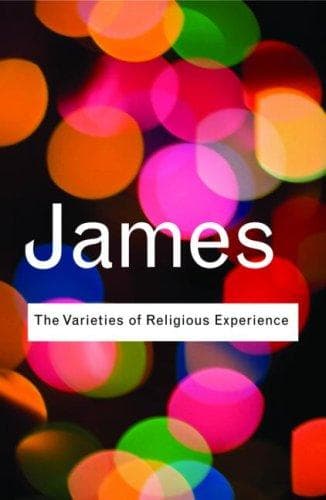
The Varieties of Religious Experience: A Study in Human NatureJames, William
ReligionComparative
The Varieties of Religious Experience: A Study in Human Nature
James, William
Conversion; Experience (Religion); Philosophy and religion; Psychology, Religious; Religion
There are only two ways in which it is possible to get rid of anger,
worry, fear, despair, or other undesirable affections. One is that an
opposite affection should overpoweringly break over us, and the other is
by getting so exhausted with the struggle that we have to stop,—so we drop
down, give up, and _don’t care_ any longer. Our emotional brain‐centres
strike work, and we lapse into a temporary apathy. Now there is
documentary proof that this state of temporary exhaustion not infrequently
forms part of the conversion crisis. So long as the egoistic worry of the
sick soul guards the door, the expansive confidence of the soul of faith
gains no presence. But let the former faint away, even but for a moment,
and the latter can profit by the opportunity, and, having once acquired
possession, may retain it. Carlyle’s Teufelsdröckh passes from the
everlasting No to the everlasting Yes through a “Centre of Indifference.”
Let me give you a good illustration of this feature in the conversion
process. That genuine saint, David Brainerd, describes his own crisis in
the following words:—
“One morning, while I was walking in a solitary place as usual, I
at once saw that all my contrivances and projects to effect or
procure deliverance and salvation for myself were utterly in vain;
I was brought quite to a stand, as finding myself totally lost. I
saw that it was forever impossible for me to do anything towards
helping or delivering myself, that I had made all the pleas I ever
could have made to all eternity; and that all my pleas were vain,
for I saw that self‐interest had led me to pray, and that I had
never once prayed from any respect to the glory of God. I saw that
there was no necessary connection between my prayers and the
bestowment of divine mercy; that they laid not the least
obligation upon God to bestow his grace upon me; and that there
was no more virtue or goodness in them than there would be in my
paddling with my hand in the water. I saw that I had been heaping
up my devotions before God, fasting, praying, etc., pretending,
and indeed really thinking sometimes that I was aiming at the
glory of God; whereas I never once truly intended it, but only my
own happiness. I saw that as I had never done anything for God, I
had no claim on anything from him but perdition, on account of my
hypocrisy and mockery. When I saw evidently that I had regard to
nothing but self‐interest, then my duties appeared a vile mockery
and a continual course of lies, for the whole was nothing but
self‐worship, and an horrid abuse of God.
Public-domain text, read in full here on John Shaqi.
Reviews
Reviews
No reviews yet
Be the first to share your thoughts on this work.
Elsewhere in the archive
Join the Discussion
Join the discussion
Sign in to leave a comment or review.
Sign InorCreate an account