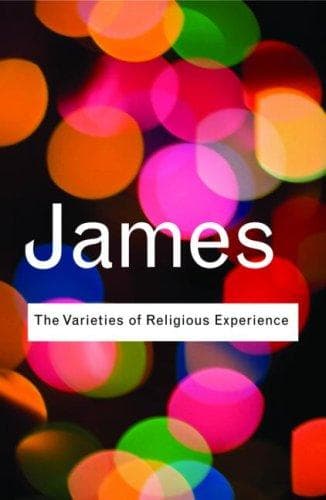
The Varieties of Religious Experience: A Study in Human Nature — John Shaqi
The Varieties of Religious Experience: A Study in Human NatureJames, William
ReligionComparative
The Varieties of Religious Experience: A Study in Human Nature
James, William
Conversion; Experience (Religion); Philosophy and religion; Psychology, Religious; Religion
Insane conditions have this advantage, that they isolate special factors
of the mental life, and enable us to inspect them unmasked by their more
usual surroundings. They play the part in mental anatomy which the scalpel
and the microscope play in the anatomy of the body. To understand a thing
rightly we need to see it both out of its environment and in it, and to
have acquaintance with the whole range of its variations. The study of
hallucinations has in this way been for psychologists the key to their
comprehension of normal sensation, that of illusions has been the key to
the right comprehension of perception. Morbid impulses and imperative
conceptions, “fixed ideas,” so called, have thrown a flood of light on the
psychology of the normal will; and obsessions and delusions have performed
the same service for that of the normal faculty of belief.
Similarly, the nature of genius has been illuminated by the attempts, of
which I already made mention, to class it with psychopathical phenomena.
Borderland insanity, crankiness, insane temperament, loss of mental
balance, psychopathic degeneration (to use a few of the many synonyms by
which it has been called), has certain peculiarities and liabilities
which, when combined with a superior quality of intellect in an
individual, make it more probable that he will make his mark and affect
his age, than if his temperament were less neurotic. There is of course no
special affinity between crankiness as such and superior intellect,(7) for
most psychopaths have feeble intellects, and superior intellects more
commonly have normal nervous systems. But the psychopathic temperament,
whatever be the intellect with which it finds itself paired, often brings
with it ardor and excitability of character. The cranky person has
extraordinary emotional susceptibility. He is liable to fixed ideas and
obsessions. His conceptions tend to pass immediately into belief and
action; and when he gets a new idea, he has no rest till he proclaims it,
or in some way “works it off.” “What shall I think of it?” a common person
says to himself about a vexed question; but in a “cranky” mind “What must
I do about it?” is the form the question tends to take. In the
autobiography of that high‐souled woman, Mrs. Annie Besant, I read the
following passage: “Plenty of people wish well to any good cause, but very
few care to exert themselves to help it, and still fewer will risk
anything in its support. ‘Some one ought to do it, but why should I?’ is
the ever reëchoed phrase of weak‐kneed amiability. ‘Some one ought to do
it, so why not I?’ is the cry of some earnest servant of man, eagerly
forward springing to face some perilous duty. Between these two sentences
lie whole centuries of moral evolution.” True enough! and between these
two sentences lie also the different destinies of the ordinary sluggard
and the psychopathic man. Thus, when a superior intellect and a
psychopathic temperament coalesce—as in the endless permutations and
Public-domain text, read in full here on John Shaqi.
Reviews
Reviews
No reviews yet
Be the first to share your thoughts on this work.
Join the Discussion
Join the discussion
Sign in to leave a comment or review.
Sign InorCreate an account