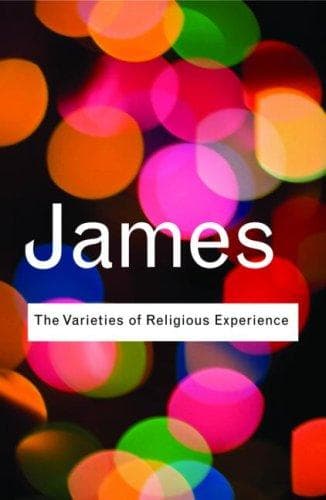
The Varieties of Religious Experience: A Study in Human NatureJames, William
ReligionComparative
The Varieties of Religious Experience: A Study in Human Nature
James, William
Conversion; Experience (Religion); Philosophy and religion; Psychology, Religious; Religion
“I went into the old Adelphi Theatre, where there was a Holiness
meeting, ... and I began saying, ‘Lord, Lord, I must have this
blessing.’ Then what was to me an audible voice said: ‘Are you
willing to give up everything to the Lord?’ and question after
question kept coming up, to all of which I said: ‘Yes, Lord; yes,
Lord!’ until this came: ‘Why do you not accept it _now_?’ and I
said: ‘I do, Lord.’—I felt no particular joy, only a trust. Just
then the meeting closed, and, as I went out on the street, I met a
gentleman smoking a fine cigar, and a cloud of smoke came into my
face, and I took a long, deep breath of it, and praise the Lord,
all my appetite for it was gone. Then as I walked along the
street, passing saloons where the fumes of liquor came out, I
found that all my taste and longing for that accursed stuff was
gone. Glory to God! ... [But] for ten or eleven long years [after
that] I was in the wilderness with its ups and downs. My appetite
for liquor never came back.”
The classic case of Colonel Gardiner is that of a man cured of sexual
temptation in a single hour. To Mr. Spears the colonel said, “I was
effectually cured of all inclination to that sin I was so strongly
addicted to that I thought nothing but shooting me through the head could
have cured me of it; and all desire and inclination to it was removed, as
entirely as if I had been a sucking child; nor did the temptation return
to this day.” Mr. Webster’s words on the same subject are these: “One
thing I have heard the colonel frequently say, that he was much addicted
to impurity before his acquaintance with religion; but that, so soon as he
was enlightened from above, he felt the power of the Holy Ghost changing
his nature so wonderfully that his sanctification in this respect seemed
more remarkable than in any other.”(148)
Public-domain text, read in full here on John Shaqi.
Reviews
Reviews
No reviews yet
Be the first to share your thoughts on this work.
Elsewhere in the archive
Join the Discussion
Join the discussion
Sign in to leave a comment or review.
Sign InorCreate an account