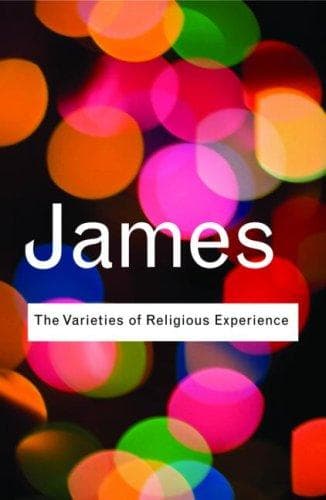
The Varieties of Religious Experience: A Study in Human NatureJames, William
ReligionComparative
The Varieties of Religious Experience: A Study in Human Nature
James, William
Conversion; Experience (Religion); Philosophy and religion; Psychology, Religious; Religion
Such rapid abolition of ancient impulses and propensities reminds us so
strongly of what has been observed as the result of hypnotic suggestion
that it is difficult not to believe that subliminal influences play the
decisive part in these abrupt changes of heart, just as they do in
hypnotism.(149) Suggestive therapeutics abound in records of cure, after a
few sittings, of inveterate bad habits with which the patient, left to
ordinary moral and physical influences, had struggled in vain. Both
drunkenness and sexual vice have been cured in this way, action through
the subliminal seeming thus in many individuals to have the prerogative of
inducing relatively stable change. If the grace of God miraculously
operates, it probably operates through the subliminal door, then. But just
_how_ anything operates in this region is still unexplained, and we shall
do well now to say good‐by to the _process_ of transformation
altogether,—leaving it, if you like, a good deal of a psychological or
theological mystery,—and to turn our attention to the fruits of the
religious condition, no matter in what way they may have been
produced.(150)
The collective name for the ripe fruits of religion in a character is
Saintliness.(151) The saintly character is the character for which
spiritual emotions are the habitual centre of the personal energy; and
there is a certain composite photograph of universal saintliness, the same
in all religions, of which the features can easily be traced.(152)
They are these:—
1. A feeling of being in a wider life than that of this world’s selfish
little interests; and a conviction, not merely intellectual, but as it
were sensible, of the existence of an Ideal Power. In Christian
saintliness this power is always personified as God; but abstract moral
ideals, civic or patriotic utopias, or inner visions of holiness or right
may also be felt as the true lords and enlargers of our life, in ways
which I described in the lecture on the Reality of the Unseen.(153)
2. A sense of the friendly continuity of the ideal power with our own
life, and a willing self‐surrender to its control.
3. An immense elation and freedom, as the outlines of the confining
selfhood melt down.
4. A shifting of the emotional centre towards loving and harmonious
affections, towards “yes, yes” and away from “no,” where the claims of the
non‐ego are concerned.
These fundamental inner conditions have characteristic practical
consequences, as follows:—
_a._ _Asceticism._—The self‐surrender may become so passionate as to turn
into self‐immolation. It may then so overrule the ordinary inhibitions of
the flesh that the saint finds positive pleasure in sacrifice and
asceticism, measuring and expressing as they do the degree of his loyalty
to the higher power.
Public-domain text, read in full here on John Shaqi.
Reviews
Reviews
No reviews yet
Be the first to share your thoughts on this work.
Elsewhere in the archive
Join the Discussion
Join the discussion
Sign in to leave a comment or review.
Sign InorCreate an account