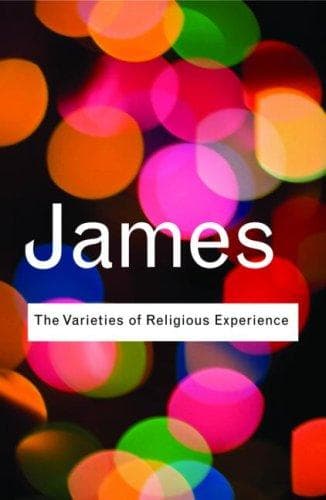
The Varieties of Religious Experience: A Study in Human NatureJames, William
ReligionComparative
The Varieties of Religious Experience: A Study in Human Nature
James, William
Conversion; Experience (Religion); Philosophy and religion; Psychology, Religious; Religion
The transition from tenseness, self‐responsibility, and worry, to
equanimity, receptivity, and peace, is the most wonderful of all those
shiftings of inner equilibrium, those changes of the personal centre of
energy, which I have analyzed so often; and the chief wonder of it is that
it so often comes about, not by doing, but by simply relaxing and throwing
the burden down. This abandonment of self‐responsibility seems to be the
fundamental act in specifically religious, as distinguished from moral
practice. It antedates theologies and is independent of philosophies.
Mind‐cure, theosophy, stoicism, ordinary neurological hygiene, insist on
it as emphatically as Christianity does, and it is capable of entering
into closest marriage with every speculative creed.(173) Christians who
have it strongly live in what is called “recollection,” and are never
anxious about the future, nor worry over the outcome of the day. Of Saint
Catharine of Genoa it is said that “she took cognizance of things, only as
they were presented to her in succession, _moment by moment_.” To her holy
soul, “the divine moment was the present moment,... and when the present
moment was estimated in itself and in its relations, and when the duty
that was involved in it was accomplished, it was permitted to pass away as
if it had never been, and to give way to the facts and duties of the
moment which came after.”(174)
Hinduism, mind‐cure, and theosophy all lay great emphasis upon this
concentration of the consciousness upon the moment at hand.
‐‐‐‐‐‐‐‐‐‐‐‐‐‐‐‐‐‐‐‐‐‐‐‐‐‐‐‐‐‐‐‐‐‐‐‐‐
The next religious symptom which I will note is what I have called Purity
of Life. The saintly person becomes exceedingly sensitive to inner
inconsistency or discord, and mixture and confusion grow intolerable. All
the mind’s objects and occupations must be ordered with reference to the
special spiritual excitement which is now its keynote. Whatever is
unspiritual taints the pure water of the soul and is repugnant. Mixed with
this exaltation of the moral sensibilities there is also an ardor of
sacrifice, for the beloved deity’s sake, of everything unworthy of him.
Sometimes the spiritual ardor is so sovereign that purity is achieved at a
stroke—we have seen examples. Usually it is a more gradual conquest. Billy
Bray’s account of his abandonment of tobacco is a good example of the
latter form of achievement.
Public-domain text, read in full here on John Shaqi.
Reviews
Reviews
No reviews yet
Be the first to share your thoughts on this work.
Elsewhere in the archive
Join the Discussion
Join the discussion
Sign in to leave a comment or review.
Sign InorCreate an account