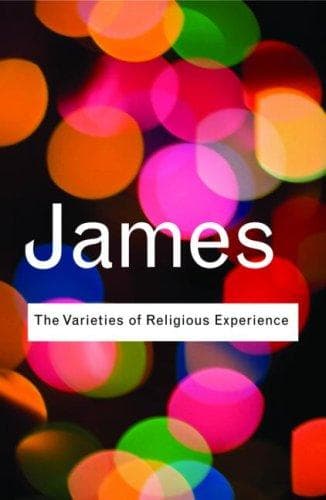
The Varieties of Religious Experience: A Study in Human NatureJames, William
ReligionComparative
The Varieties of Religious Experience: A Study in Human Nature
James, William
Conversion; Experience (Religion); Philosophy and religion; Psychology, Religious; Religion
Well, no more for past atrocities than for this atrocity should we make
piety responsible. At most we may blame piety for not availing to check
our natural passions, and sometimes for supplying them with hypocritical
pretexts. But hypocrisy also imposes obligations, and with the pretext
usually couples some restriction; and when the passion gust is over, the
piety may bring a reaction of repentance which the irreligious natural man
would not have shown.
For many of the historic aberrations which have been laid to her charge,
religion as such, then, is not to blame. Yet of the charge that over‐
zealousness or fanaticism is one of her liabilities we cannot wholly
acquit her, so I will next make a remark upon that point. But I will
preface it by a preliminary remark which connects itself with much that
follows.
‐‐‐‐‐‐‐‐‐‐‐‐‐‐‐‐‐‐‐‐‐‐‐‐‐‐‐‐‐‐‐‐‐‐‐‐‐
Our survey of the phenomena of saintliness has unquestionably produced in
your minds an impression of extravagance. Is it necessary, some of you
have asked, as one example after another came before us, to be quite so
fantastically good as that? We who have no vocation for the extremer
ranges of sanctity will surely be let off at the last day if our humility,
asceticism, and devoutness prove of a less convulsive sort. This
practically amounts to saying that much that it is legitimate to admire in
this field need nevertheless not be imitated, and that religious
phenomena, like all other human phenomena, are subject to the law of the
golden mean. Political reformers accomplish their successive tasks in the
history of nations by being blind for the time to other causes. Great
schools of art work out the effects which it is their mission to reveal,
at the cost of a one‐sidedness for which other schools must make amends.
We accept a John Howard, a Mazzini, a Botticelli, a Michael Angelo, with a
kind of indulgence. We are glad they existed to show us that way, but we
are glad there are also other ways of seeing and taking life. So of many
of the saints whom we have looked at. We are proud of a human nature that
could be so passionately extreme, but we shrink from advising others to
follow the example. The conduct we blame ourselves for not following lies
nearer to the middle line of human effort. It is less dependent on
particular beliefs and doctrines. It is such as wears well in different
ages, such as under different skies all judges are able to commend.
The fruits of religion, in other words, are, like all human products,
liable to corruption by excess. Common sense must judge them. It need not
blame the votary; but it may be able to praise him only conditionally, as
one who acts faithfully according to his lights. He shows us heroism in
one way, but the unconditionally good way is that for which no indulgence
need be asked.
Public-domain text, read in full here on John Shaqi.
Reviews
Reviews
No reviews yet
Be the first to share your thoughts on this work.
Elsewhere in the archive
Join the Discussion
Join the discussion
Sign in to leave a comment or review.
Sign InorCreate an account