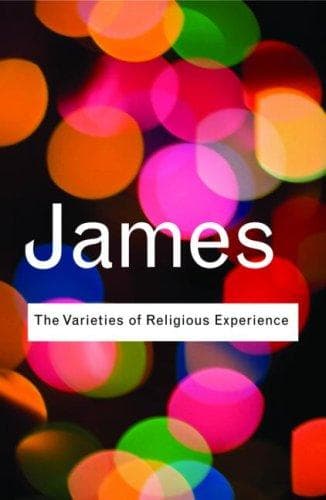
The Varieties of Religious Experience: A Study in Human NatureJames, William
ReligionComparative
The Varieties of Religious Experience: A Study in Human Nature
James, William
Conversion; Experience (Religion); Philosophy and religion; Psychology, Religious; Religion
I can find no other sorts of fruit than these of Louis’s saintship. He
died in 1591, in his twenty‐ninth year, and is known in the Church as the
patron of all young people. On his festival, the altar in the chapel
devoted to him in a certain church in Rome “is embosomed in flowers,
arranged with exquisite taste; and a pile of letters may be seen at its
foot, written to the Saint by young men and women, and directed to
‘Paradiso.’ They are supposed to be burnt unread except by San Luigi, who
must find singular petitions in these pretty little missives, tied up now
with a green ribbon, expressive of hope, now with a red one, emblematic of
love,” etc.(212)
Our final judgment of the worth of such a life as this will depend largely
on our conception of God, and of the sort of conduct he is best pleased
with in his creatures. The Catholicism of the sixteenth century paid
little heed to social righteousness; and to leave the world to the devil
whilst saving one’s own soul was then accounted no discreditable scheme.
To‐day, rightly or wrongly, helpfulness in general human affairs is, in
consequence of one of those secular mutations in moral sentiment of which
I spoke, deemed an essential element of worth in character; and to be of
some public or private use is also reckoned as a species of divine
service. Other early Jesuits, especially the missionaries among them, the
Xaviers, Brébeufs, Jogues, were objective minds, and fought in their way
for the world’s welfare; so their lives to‐day inspire us. But when the
intellect, as in this Louis, is originally no larger than a pin’s head,
and cherishes ideas of God of corresponding smallness, the result,
notwithstanding the heroism put forth, is on the whole repulsive. Purity,
we see in the object‐lesson, is _not_ the one thing needful; and it is
better that a life should contract many a dirt‐mark, than forfeit
usefulness in its efforts to remain unspotted.
Proceeding onwards in our search of religious extravagance, we next come
upon excesses of Tenderness and Charity. Here saintliness has to face the
charge of preserving the unfit, and breeding parasites and beggars.
“Resist not evil,” “Love your enemies,” these are saintly maxims of which
men of this world find it hard to speak without impatience. Are the men of
this world right, or are the saints in possession of the deeper range of
truth?
No simple answer is possible. Here, if anywhere, one feels the complexity
of the moral life, and the mysteriousness of the way in which facts and
ideals are interwoven.
Public-domain text, read in full here on John Shaqi.
Reviews
Reviews
No reviews yet
Be the first to share your thoughts on this work.
Elsewhere in the archive
Join the Discussion
Join the discussion
Sign in to leave a comment or review.
Sign InorCreate an account