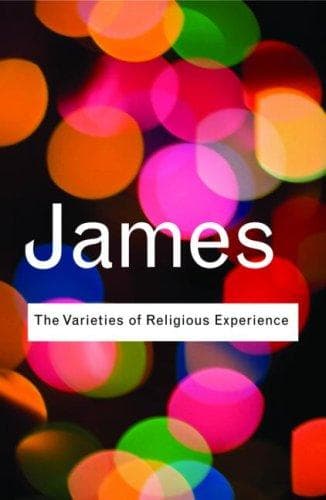
The Varieties of Religious Experience: A Study in Human Nature — John Shaqi
The Varieties of Religious Experience: A Study in Human NatureJames, William
ReligionComparative
The Varieties of Religious Experience: A Study in Human Nature
James, William
Conversion; Experience (Religion); Philosophy and religion; Psychology, Religious; Religion
There can be no doubt that as a matter of fact a religious life,
exclusively pursued, does tend to make the person exceptional and
eccentric. I speak not now of your ordinary religious believer, who
follows the conventional observances of his country, whether it be
Buddhist, Christian, or Mohammedan. His religion has been made for him by
others, communicated to him by tradition, determined to fixed forms by
imitation, and retained by habit. It would profit us little to study this
second‐hand religious life. We must make search rather for the original
experiences which were the pattern‐setters to all this mass of suggested
feeling and imitated conduct. These experiences we can only find in
individuals for whom religion exists not as a dull habit, but as an acute
fever rather. But such individuals are “geniuses” in the religious line;
and like many other geniuses who have brought forth fruits effective
enough for commemoration in the pages of biography, such religious
geniuses have often shown symptoms of nervous instability. Even more
perhaps than other kinds of genius, religious leaders have been subject to
abnormal psychical visitations. Invariably they have been creatures of
exalted emotional sensibility. Often they have led a discordant inner
life, and had melancholy during a part of their career. They have known no
measure, been liable to obsessions and fixed ideas; and frequently they
have fallen into trances, heard voices, seen visions, and presented all
sorts of peculiarities which are ordinarily classed as pathological.
Often, moreover, these pathological features in their career have helped
to give them their religious authority and influence.
If you ask for a concrete example, there can be no better one than is
furnished by the person of George Fox. The Quaker religion which he
founded is something which it is impossible to overpraise. In a day of
shams, it was a religion of veracity rooted in spiritual inwardness, and a
return to something more like the original gospel truth than men had ever
known in England. So far as our Christian sects to‐day are evolving into
liberality, they are simply reverting in essence to the position which Fox
and the early Quakers so long ago assumed. No one can pretend for a moment
that in point of spiritual sagacity and capacity, Fox’s mind was unsound.
Every one who confronted him personally, from Oliver Cromwell down to
county magistrates and jailers, seems to have acknowledged his superior
power. Yet from the point of view of his nervous constitution, Fox was a
psychopath or _détraqué_ of the deepest dye. His Journal abounds in
entries of this sort:—
Public-domain text, read in full here on John Shaqi.
Reviews
Reviews
No reviews yet
Be the first to share your thoughts on this work.
Join the Discussion
Join the discussion
Sign in to leave a comment or review.
Sign InorCreate an account