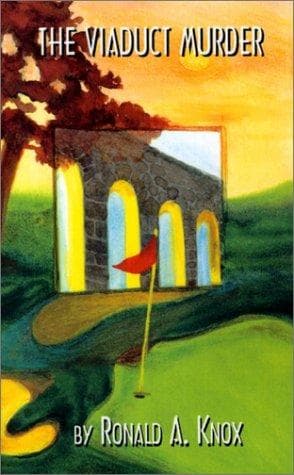
Detective and mystery stories; England -- Fiction; Murder -- Investigation -- Fiction
If the general accommodation at the Paston Oatvile dormy-house cannot
be described as cloistral, it must be admitted that the rooms in it
where you can claim privacy are not much better than cells. Mordaunt
Reeves, however, had done something to turn his apartments into a
civilized dwelling-place; there were pictures which did not illustrate
wings, and books devoted to other subjects than the multitudinous
possibilities of error in playing golf. Gordon and he had each a
comfortable arm-chair, each a corner of the fire-place to flick his
cigarette-ash into, when they met that evening to talk over the
possibilities of the situation as it had hitherto developed.
“Everybody,” said Reeves, “if you notice, has already started treating
an assumption as if it were a fact. They all say it was Brotherhood we
found lying there; they all say he committed suicide because he had
just gone bankrupt. Now, as a matter of fact, we don’t know that it
was Brotherhood at all. He has not been heard of, but there hasn’t
been much time to hear of him; and nothing is more probable than that
a man who has gone bankrupt should skip without leaving any traces.”
“Yes, but somebody’s dead; you’ve got to find a gap somewhere in the
ranks of Society to match our corpus.”
“Still, that’s mere negative arguing. And there are several points
that tell against its being Brotherhood. In the first place, that
ticket. Brotherhood goes up and down every day; do you mean to tell me
he hasn’t got a season? Second point, if it was Brotherhood there’s an
odd coincidence—he died within ten minutes’ walk of his own bungalow;
why there, any more than anywhere else on the line?”
“It’s a coincidence that Brotherhood should be killed so near his own
bungalow. But the murder, whether we like it or not, has been
committed just there, so I don’t see why it shouldn’t be him as much
as anybody else. However, go on.”
“Third point, the handkerchief. Why should Brotherhood be carrying
somebody else’s handkerchief?”
“If it comes to that, why should somebody else be carrying
Brotherhood’s correspondence?”
“Oh, Brotherhood is mixed up in it somehow right enough. We shall see.
Next point to be considered, was it accident, suicide, or murder?”
“You can cut out accident, surely. That would be a
coincidence—somebody carrying Brotherhood’s letter to fall out of the
train by mere accident just where Brotherhood lives.”
“Very well, for the present we’ll ask Murder or Suicide? Now, I’ve
several arguments against suicide. First, as I told you, the hat. He
wasn’t alone when he fell out of the carriage, or who threw the hat
after him?”
“There was no mark in the hat, was there?”
Public-domain text, read in full here on John Shaqi.
Reviews
Reviews
No reviews yet
Be the first to share your thoughts on this work.
Join the Discussion
Join the discussion
Sign in to leave a comment or review.
Sign InorCreate an account