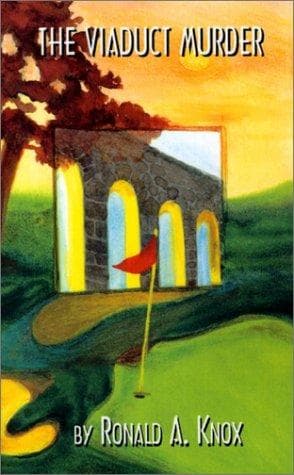
Detective and mystery stories; England -- Fiction; Murder -- Investigation -- Fiction
“I can practically prove it,” said Reeves. “Look here, the man wanted
to spell out a message in ten words. There was a book, arranged upon
somehow beforehand. The first few words were ordinary words, that you
could find anywhere on any page: and naturally, to save himself and
the other man trouble in counting, he took them from the top of the
page, so you get lines 7, 4, 2, 6, and 4 of pages 8, 18, 21, 25 and
31. The sixth word he wanted was an obscure sort of word, perhaps even
a proper name. He had to go right on to page 74, and even then he
could only find his word on the 13th line of it. Then the next two
words came easy, comparatively, but the ninth word was a brute, he
couldn’t find it till page 113, and on the 17th line at that. And by
that time he’d got nearly to the end of the book—a book, then, of only
120 pages or so probably; a paper edition, I suspect—so he had to go
back to the beginning again, which he hadn’t meant to do.”
“Bravo!” said Gordon. “Have another injection of cocaine.”
“The curse of the thing is,” said Mordaunt Reeves, “that with a book
cipher you can’t possibly guess the message unless you’ve got the
book. I think we shall have to establish the identity before we get
any further on that tack. Let’s have a look at the letter now.”
The letter was a curt official communication from the Railway Company,
only the details being filled in in ink, the rest a mere printed form:
London Midland and Scottish Railway.
10. 10. 19XY.
Dear Sir,
I beg to acknowledge receipt of your letter of 9th instant and have
given orders for a berth to be reserved in the sleeping car attached
to the 7.30 train on Thursday (corrected to Wednesday) the 18th
(corrected to 17th) of October to Glasgow. I note that you will join
the train at Crewe.
S. Brotherhood Esq.
“These corrections are rummy,” said Reeves. “I wonder if perhaps
Brotherhood’s letter corrected itself in a postscript? You see,
assuming that Brotherhood was skipping, it’s all right for him to go
to Glasgow—rather ingenious, in fact—but why shouldn’t he travel
to-night, the sixteenth, instead of to-morrow night?”
“He couldn’t get away early enough. Or could he? Got a Bradshaw?”
Gordon proceeded to look up the trains with an irritating
thoroughness, while Reeves danced with impatience—there is no
impatience like that engendered by watching another man look up
Bradshaw. “That’s all right,” said Gordon at last. “In order to catch
the Scottish train at Crewe he’d have had to take that earlier train,
the one Marryatt came up by, and get out at Binver. He took the 3.47,
I suppose, because he couldn’t get away sooner. Perhaps, if we’re
right in thinking he wanted to skip, he was going to go across country
by car to-morrow and confuse his tracks a bit.”
Public-domain text, read in full here on John Shaqi.
Reviews
Reviews
No reviews yet
Be the first to share your thoughts on this work.
Join the Discussion
Join the discussion
Sign in to leave a comment or review.
Sign InorCreate an account