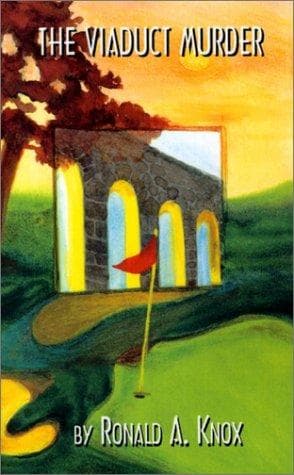
Detective and mystery stories; England -- Fiction; Murder -- Investigation -- Fiction
“Yes, but one’s bound to notice every deviation from the normal when
one’s trying to trace causes. Look here, here’s Whitchurch. Do you
mind getting out and calling at the Hatcheries—that house, there—and
finding out, on some excuse, when Davenant got there, and whether he’s
there now? You’re not known, you see—but be devilish tactful; we don’t
want to put anybody on his guard.”
“Right-o! more lying necessary, I foresee. Oh, what a tangled web we
weave when first we practise to deceive. So long, Sherlock, meet you
at dinner.”
Reeves’ errand, it appeared when he got to Binver, was once more with
the railway staff. He went up to a porter, and said, “Excuse me, does
this train get cleared out here? I mean, if one leaves a thing in the
carriage, would it be taken out here?”
“That’s right, sir. Left Luggage Office is what you want.”
“Well, this was only a paper book. I thought perhaps you people
cleared them away for yourselves, like the newspapers.”
“Ah, if it was a paper book, we ’aven’t any orders to take that on to
the Left Luggage Office. We takes those away, mostly; what might the
name of your book be, sir?”
This was not at all the question Reeves wanted, but he was prepared
for it. “It was _The Sorrows of Satan_, by Miss Corelli,” he said. “I
left it in one of these carriages yesterday.”
“Well, sir, I cleaned out this train yesterday myself, and there
wasn’t no book of that name. A passenger must have taken it out with
them most likely. There wasn’t not but one book I found in those
carriages, and you’re welcome to that, sir; I’ve got it on the seat
there.” And he produced a repellent-looking volume entitled _Formation
of Character_, by J. B. S. Watson.
Reeves was trembling with excitement, but it was clearly not a case
for showing any enthusiasm. “Well, give you sixpence for it,” he said,
and the porter willingly agreed—he had guessed rightly that the
sixpence would prove to be half-a-crown.
It was an agony dawdling back by a slow train to Paston Oatvile,
knowing that he could not get at the cipher-document till he regained
his rooms. Merely as a book, the thing seemed to lack thrill. It
seemed hours before he reached the dormy-house, and yet Gordon had not
returned. So much the better; he would be able to work out the fateful
message by himself. It could not be a coincidence, though it had been
a long shot to start with. A book of that length (so he had argued to
himself) would have been the sort of book one reads in the train.
Brotherhood would arrange to have a cipher-message sent him out of the
book which he had constantly in his hands at the moment. He would be
travelling with it; it was not on the body or by the side of the line;
the murderer might not have thought of removing it. This, then, must
be the book itself.
As he worked out the message he became less confident. It appeared to
run as follows: “Hold and it thoughts with the I highest and to.”
“Damn,” said Mordaunt Reeves.
Chapter VI
Public-domain text, read in full here on John Shaqi.
Reviews
Reviews
No reviews yet
Be the first to share your thoughts on this work.
Join the Discussion
Join the discussion
Sign in to leave a comment or review.
Sign InorCreate an account