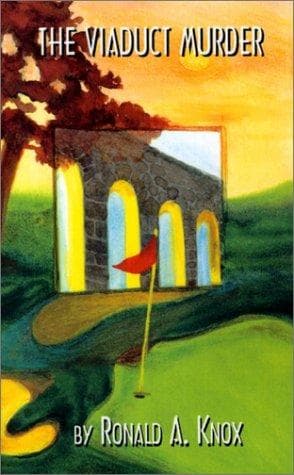
Detective and mystery stories; England -- Fiction; Murder -- Investigation -- Fiction
No need, then, to mourn for Paston Oatvile; the sanctities of its
manorial soil will be as interminable as golf. An enterprising club,
seconded by an accommodating railway, has invested its rural solitude
with an air of suburbanity; it is only an hour’s journey from London,
and the distance could be covered in three-quarters of the time if the
club were less exclusive. Bungalows, each fitted with its own garage,
and cottages that contain billiard-rooms have sprung up in the
neighbourhood; thirty or forty of these, all rough-cast and red tiles,
conceal by a series of ingenious dissimilarities their indebtedness to
the brain of a single architect. In the middle of these—the cathedral,
the town hall, the market-place around which all their activities
centre—stands the dower-house of the Oatviles, the dormy-house of
to-day. The committee have built on to it largely in what is
understood to be the same style, and indeed, the new part is
undeniably brick and timber, though in wet weather the timber is apt
to warp and fall off. It is not only a club-house, of course, it is
also an expensive hotel—if we may call it an hotel, and not rather a
monastic settlement; for the inhabitants of these pleasant rooms all
live for one end—golf: twice daily they go round the course, with all
the leisurely solemnity of Benedictines reciting their office, and
every night they meet in corona to discuss the mysteries of their
religion.
Which reminds me that I have forgotten to mention the village Church.
There is still a village, that straggles mysteriously, like so many
English villages, in the form of a hollow square. In the old days, the
Church interposed itself between the village and the Great House, a
kind of mercy-seat through which the squire could be appeased upon
occasion. Though much older than the Park or the fortunes of the
Oatvile family, it had acquired, from its enclosed position, the air
of a parasitical institution, an undergrowth of Protestant feudalism.
To-day, it somehow strikes the eye as a by-product of the golfing
industry; people who ask the way to it (and they are rare) are
directed to the fifteenth green; the service on Sunday is at half-past
nine, so as to allow for the improbable chance of anybody wanting to
fortify himself for the morning round by divine worship; the sexton
will caddy for you except on the afternoon of a funeral. Conformably
with this, the incumbent of the parish, who is to figure in this
story, was a golfing parson presented by an absentee squire to a
living which offered few material attractions. He had managed to let
the parsonage, which was more than twenty minutes’ walk from the first
tee, and lived in the dormy-house permanently; arguing, not without
reason, that it was the centre of all the life there was in the
parish. If you are disposed to take a look at him, you have only to
open the smoking-room door; there he sits, this October afternoon of
rain and fog, with three equally weatherbound companions, a foursome
Public-domain text, read in full here on John Shaqi.
Reviews
Reviews
No reviews yet
Be the first to share your thoughts on this work.
Join the Discussion
Join the discussion
Sign in to leave a comment or review.
Sign InorCreate an account