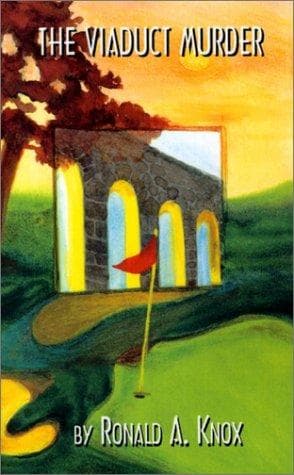
Detective and mystery stories; England -- Fiction; Murder -- Investigation -- Fiction
“I’m sure Sullivan didn’t say ‘No.’ Have you never observed that an
Irishman is incapable of saying yes or no to a plain question? If you
say, Has the rain stopped, he won’t say Yes, or No; he’ll say, It has,
or It hasn’t. The explanation of that is a perfectly simple one: there
is no native word for either in Irish, any more than there is in
Latin. And that in its turn throws a very important light on the Irish
character——”
“Oh, go and throw an important light on your grandmother’s ducks,”
said Reeves. “I want to hear about this interview. Was he telling the
truth, d’you think?”
“From his manner, I thought not. So, when his back was turned, I made
bold to enter the house and take a look round for myself.” And he
described the evening’s entertainment in detail.
“By Jove, you are warming to the part,” said Marryatt. “I should like
to see you get run in by the police, Gordon.”
“You say,” Reeves interrupted, “that you don’t think he was there
yesterday, on the Tuesday, that is, because he hadn’t taken the letter
away. He went off, then, on Monday, but when he went off he took with
him all that a man normally takes with him if he’s going to sleep in a
different house that night, plus a piece of soap and a towel, which
are not things one usually carries about in one’s luggage?”
“That’s the best I can make of it,” said Gordon. “And the
photograph—it might be an accident, of course, but I feel convinced
that he put that in his luggage at the last moment.”
“And that’s frightfully important,” said Reeves, “because it obviously
means that on Monday, before anything happened to Brotherhood,
Davenant was reckoning on leaving home for some little time; and not
returning immediately to wherever it is he lives ordinarily, because
he must keep collars and things there. But he also thought he might be
away for some longish time, or he wouldn’t have worried to take the
photograph with him. What was the frame like?”
“Quite modern; no maker’s name on it.”
“I’m afraid that means the murder must have been a premeditated one,”
put in Marryatt. “I hope it’s not uncharitable to say so, but I never
did like Davenant. I don’t think I’m ordinarily a person of very
narrow religious views, and I’ve known Romans that were quite easy to
get on with. But Davenant was a person of quite ungovernable temper,
you must remember that.”
“His ungovernable temper would be much more important,” objected
Gordon, “if the murder were not a premeditated one.”
“But it’s not only that,” persisted Marryatt. “To me, there was always
something sinister about him; he had fits of melancholy, and would
rail at the people and the politicians he didn’t like in a way that
was almost frightening. Surely I’m not alone in that impression?”
“What did Davenant look like?” asked Carmichael suddenly.
“Good Lord,” said Reeves, “you ought to remember that well enough. You
must have met him down here pretty well every week-end, and he was
quite well known.”
Public-domain text, read in full here on John Shaqi.
Reviews
Reviews
No reviews yet
Be the first to share your thoughts on this work.
Join the Discussion
Join the discussion
Sign in to leave a comment or review.
Sign InorCreate an account