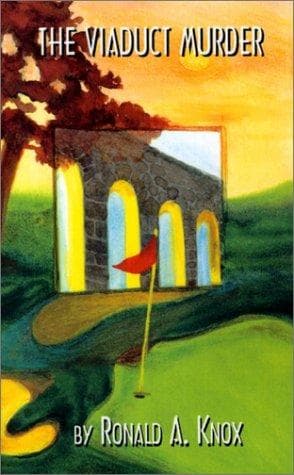
Detective and mystery stories; England -- Fiction; Murder -- Investigation -- Fiction
“Oh, I don’t know . . . No, of course; that’s it. But, as Gordon says,
it doesn’t seem to get us much further.”
“Not in itself,” agreed Carmichael. “But meanwhile it has incidentally
provided us with an extra clue.”
“What’s that?” asked Gordon.
“I’ll tell you some other time. I say, it’s time for luncheon. Let’s
go down.”
And it was not till they were downstairs that he explained his
meaning. “The other clue is the disappearance of the cipher. There’s
more in that than meets the eye, unless I’m mistaken.”
Chapter XI
A Funeral and a Vigil
“I don’t quite see what you mean,” said Reeves as they sat down to
luncheon.
“Never mind,” said Carmichael, “we shall see if I’m right or not.
Meanwhile, there’s the funeral this afternoon, and it would hardly be
decent to take any action till after that, would it? Hullo, Marryatt,
what time does the thing start?”
“Half-past two. A good many of the members mean to turn out, and one
wanted them to get away in time for an afternoon round. I must say, I
think the club’s done handsomely by poor Brotherhood, considering how
few of us really knew him. The Committee has sent a very fine wreath.”
“And that’s the only one, I should think,” said Gordon.
“Oddly enough, it isn’t. There’s one other, a peculiarly
expensive-looking thing, which came down from London. There’s no name
on it, no inscription of any kind, in fact.”
“H’m!” said Reeves; “that’s curious.”
“My dear Reeves,” expostulated Gordon, “I’m not going to have you
examining the wreaths on the coffin with your lens and forceps. There
are limits of decency.”
“Well, I won’t worry about it anyhow till Carmichael has—Hullo! hit
him on the back, Gordon.” For Carmichael had been overtaken by one of
those choking fits which the best-behaved of us are liable to.
“It’s a curious thing,” he gasped on recovering, “that one always used
to say, when one was small, that one’s drink had ‘gone the wrong way.’
Nothing at all to do with the wind-pipe, I believe.”
The funeral was, it must be confessed, a riot of irony. The members
who attended had decided that it would look bad to take their clubs
with them to the churchyard, but their costumes were plainly a
compromise between respect for the dead and a determination to get on
with business as soon as it was over. None of them had any tears to
shed. The village of Paston Oatvile turned out to a child in sheer
morbidity, to see “’im as fell down off of the railway put away.” The
sonorous assurances of the burial service had to be read out in full
earshot of the village green on which, little more than a week ago,
Brotherhood had laboriously disproved the doctrine of personal
immortality. To these same solemn cadences the great lords of Oatvile,
ever since they abandoned the Old Faith under William III, had been
laid to rest within these same walls—
Some with lives that came to nothing, some with deeds as well undone
Public-domain text, read in full here on John Shaqi.
Reviews
Reviews
No reviews yet
Be the first to share your thoughts on this work.
Join the Discussion
Join the discussion
Sign in to leave a comment or review.
Sign InorCreate an account