Detective and mystery stories; England -- Fiction; Murder -- Investigation -- Fiction
“What do you think it really feels like,” asked Marryatt, “to have
murdered a man? I mean, murderers in general always seem to lose their
heads when the thing is actually done, and give themselves away
somehow. But one would have thought, if the thing is planned with
proper deliberation, one’s feeling would be that things were working
out according to plan, and the next thing was to get clear—above all
things, to see plenty of people, and to behave quite naturally in
company.”
“Why that?” asked Gordon.
“To establish your alibi. People are often careless about that.”
“By the way,” asked Carmichael, “did you bring a paper with you down
from London? I’m interested to see the verdict in that Stanesby case.
The young fellow is connected, I hear, with the Stanesbys of
Martington.”
“Afraid I left London at three, and that’s too early for anything but
betting tips. I say, you fellows, it’s stopped raining.”
Chapter II
In the Rough
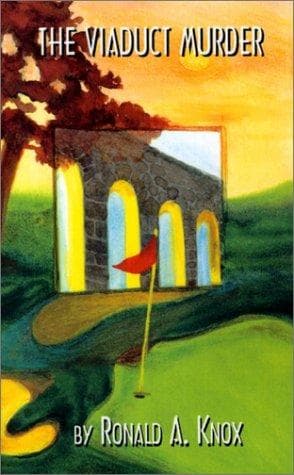
The view from the third tee was one which even a golfer might pause to
admire. Let the Wordsworthian say what he will, railways ennoble our
landscape; they give to our unassuming valleys a hint of motive and
destination. More especially, a main line with four tracks pillowed on
a sweep of tall embankment, that cannot cross a meandering country
stream without a stilt-walk upon vast columns of enduring granite,
captivates, if not the eye, at least the imagination. Such was the
railway that stretched far into the distance, paralleling the course
of your drive on the right: such was the great viaduct, some hundred
feet ahead of you, that spanned laboriously, over four giant arches,
the little river Gudgeon, most insignificant of streams. Shallow and
narrow it ran, fringed by willow-herb and meadow-sweet, a
paddling-place for cows and for unoccupied caddies. Here and there it
threw out a patch of osiers—one in particular, that nestled at the
foot of the railway-arches, was especially dreaded by golfers. In
front, just visible above the railway where it receded northwards,
were the thatched and tiled roofs of Paston Whitchurch, the next
station down the line. To the right lay the old house, in its
melancholy grandeur, behind it the village and church of Paston
Oatvile. A superb avenue of elms connected the old house with the road
between the two villages. The sun had newly come out, showing grass
the greener and earth the browner for the late rain; elemental scents
of turf and furrow greeted its restoration.
Public-domain text, read in full here on John Shaqi.
Reviews
Reviews
No reviews yet
Be the first to share your thoughts on this work.
Join the Discussion
Join the discussion
Sign in to leave a comment or review.
Sign InorCreate an account