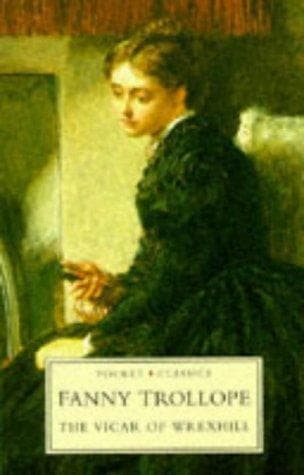
Clergy -- Fiction; Great Britain -- Fiction; Religious fiction
The beauties of an English village have been so often dwelt upon, so
often described, that I dare not linger long upon the sketch of
Wrexhill, which must of necessity precede my introduction of its vicar.
And yet not even England can show many points of greater beauty than
this oak-sheltered spot can display. Its peculiar style of scenery, half
garden, half forest in aspect, is familiar to all who are acquainted
with the New Forest, although it has features entirely its own. One of
these is an overshot mill, the sparkling fall of which is accurately and
most nobly overarched by a pair of oaks which have long been the glory
of the parish. Another is the grey and mellow beauty of its antique
church, itself unencumbered by ivy, while the wall and old stone gateway
of the churchyard look like a line and knot of sober green, enclosing it
with such a rich and unbroken luxuriance of foliage "never sear," as
seems to show that it is held sacred, and that no hand profane ever
ventured to rob its venerable mass of a leaf or a berry. Close beside
the church, and elevated by a very gentle ascent, stands the pretty
Vicarage, as if placed expressly to keep watch and ward over the safety
and repose of its sacred neighbour. The only breach in the ivy-bound
fence of the churchyard, is the little wicket gate that opens from the
Vicarage garden; but even this is arched over by the same immortal and
unfading green,--a fitting emblem of that eternity, the hope of which
emanates from the shrine it encircles. At this particular spot, indeed,
the growth of the plant is so vigorous, that it is controlled with
difficulty, and has not obeyed the hand which led it over the rustic
arch without dropping a straggling wreath or two, which if a vicar of
the nineteenth century could wear a wig, might leave him in the state
coveted for Absalom by his father. The late Vicar of Wrexhill,
however,--I speak of him who died a few weeks before my story
begins,--would never permit these graceful pendants to be shorn,
declaring that the attitude they enforced on entering the churchyard was
exactly such as befitted a Christian when passing the threshold of the
court of God.
Public-domain text, read in full here on John Shaqi.
Reviews
Reviews
No reviews yet
Be the first to share your thoughts on this work.
Join the Discussion
Join the discussion
Sign in to leave a comment or review.
Sign InorCreate an account