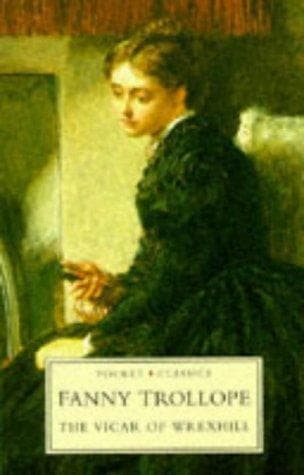
Clergy -- Fiction; Great Britain -- Fiction; Religious fiction
The day preceding his departure was Sunday, and for the first time since
their heavy loss the whole family appeared at church. They had all
dreaded the moment of reappearing before the eyes of the little village
world, and of thus giving public notice, as it were, that they no longer
required to be left to mourn in secret: but this painful ceremony came,
and was endured, like those that had preceded it; and poor Helen, as she
laid her head upon her pillow, exclaimed, "What is there that we could
not bear, and live."
The sad parting of the next morning having also passed over them, they
at once, and by necessity, fell into the mode of life which they were
hereafter to pursue. But dreary and heavy was the change that had fallen
on them, and it was long ere the mere act of assembling for their daily
meals ceased to be a source of suffering--for fearful was the blank left
by the absence of the kind, the gentle, the beloved, the venerated
being, whose voice was used to speak a blessing and a welcome over every
repast. But our natures seize with avidity the healing balm which time
and occupation offer: much variety of disposition was, however,
manifested in the manner in which each one of the family sought the
consolation they needed.
Mrs. Mowbray became evidently, though perhaps unconsciously, better both
in health and spirits from the time that her neighbours, according to
their different ranks, resumed their visits of friendship, civility, and
respect. She had testified outwardly, excepting to such an eye as
Rosalind's, more intense suffering than any other member of the family.
Nor was this in the smallest degree the result of affectation: she felt
all, and more than all, that she had ever expressed, and would gladly,
for the sake of her poor children, have concealed a part of it, had the
fibre of her character permitted her doing so. But she was demonstrative
by nature: with great softness and sweetness of temper, was joined that
species of weakness which is often said to be the most attractive
feature in the female character;--a weakness that induced her to seize
gladly and gratefully any hand extended to lead her, and which, while it
made her distrust herself, gave most sovereign sway and masterdom to
any one ready and willing to supply the strength and decision of purpose
which she wanted.
Many female philippics have been penned, I believe, against that manly
passion for superiority which leads our masters to covet in a companion
chosen for life the temper of mind here described; but I am tempted to
think that this longing to possess a being that wants protection, far
from demonstrating a disposition prone to tyranny, shows a nature
disposed to love and to cherish, in a manner perfectly accordant to the
most perfect _beau idéal_ of married life. But, on the other hand, there
may perhaps be more of fondness than judgment in those who make such
mallability of mind their first requisite in a choice so awfully
important.
Public-domain text, read in full here on John Shaqi.
Reviews
Reviews
No reviews yet
Be the first to share your thoughts on this work.
Join the Discussion
Join the discussion
Sign in to leave a comment or review.
Sign InorCreate an account