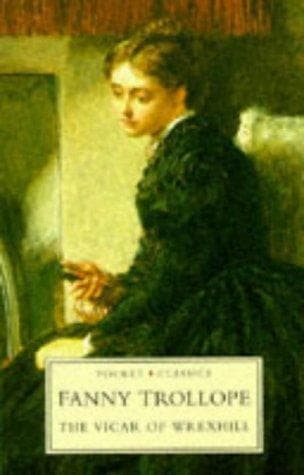
Clergy -- Fiction; Great Britain -- Fiction; Religious fiction
The neighbourhood was not a large one: Mowbray Park, and the estate
attached to it, stretched itself so far in all directions, that Oakley,
the residence of Sir Gilbert Harrington, the nearest landed proprietor,
was at the distance of more than a mile. The little village of Wrexhill,
however, had one or two pretty houses in it, inhabited by ladies and
gentlemen of moderate but independent fortune, with whom the family at
the Park associated on terms of intimacy.
Among these, the late Vicar and his family had been the decided
favourites of the whole race of Mowbrays,--and most deservedly so; for
the father was a man of piety, learning, and most amiable deportment;
his wife, a being whose temper, to say nothing of sundry other good
qualities, had made her the idol of the whole parish; and his two sons
and two daughters, just such sons and daughters as such parents deserved
to have. But, as Gregory Dobbs, the old parish clerk, observed, after
officiating at the funeral of Mr. Mowbray, "Death seemed to have taken a
spite against the village of Wrexhill, for within one short month he had
mowed down and swept away the two best and _most powerful_ men in the
parish, and 'twas no easy matter to say how long the inhabitants might
be likely to wear mourning."
The dispersion and departure of the good Vicar's family was an
additional misfortune that his parishioners had not looked for. The
living, more valuable for its pleasant house and pretty glebe than for
its revenue, was in the gift of one who through life had been, not in
appearance or profession only, but in most true sincerity, the attached
friend of the late incumbent; and Edward Wallace, his eldest son, was
bred to the church with the express understanding that the next
presentation should be his. With this persuasion, the young man's first
act on the death of his father was to tell his mother and sisters that
they should continue to inhabit the home they had so long loved. But
this arrangement was speedily overthrown; for in reply to the letter
which announced the death of his father to Sir J. C. Blackhouse, the
patron of the living, he received the following answer:
"My dear Fellow,
Public-domain text, read in full here on John Shaqi.
Reviews
Reviews
No reviews yet
Be the first to share your thoughts on this work.
Join the Discussion
Join the discussion
Sign in to leave a comment or review.
Sign InorCreate an account