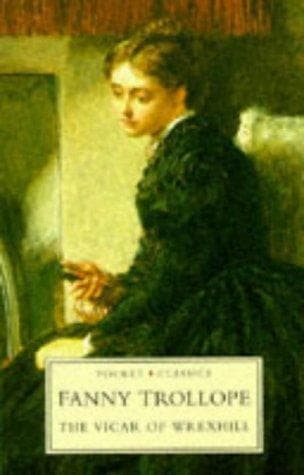
Clergy -- Fiction; Great Britain -- Fiction; Religious fiction
During the interval which had elapsed since Mrs. Torrington's
estrangement from her noble brother, his lordship had contrived to
quarrel also with his nephew and heir, and in the height of his
resentment against him made a will, leaving the whole of his unentailed
property, amounting to above eighty thousand pounds, to his sister. By a
singular coincidence, Lord Trenet died two days before Mrs. Torrington;
so that her will was made exactly one day after she had unconsciously
become the possessor of this noble fortune. Had this most unexpected
event been made known to her, however, it would probably have made no
other alteration in her will than the addition of the name of some male
friend, who might have taken care of the property during the minority of
her child: and even this would only have been done for the purpose of
saving her friend trouble; for such was her opinion of Mrs. Mowbray,
that no circumstances attending her daughter's fortune could have
induced her to place the precious deposit of her person in other hands.
The poor girl herself, while these momentous events were passing, was
stationed at the house of an acquaintance at a few miles' distance,
whither she had been sent at the first appearance of infection; and thus
in the short space of ten days, from the cherished, happy darling of
parents far from rich, she became an heiress and an orphan.
Rosalind Torrington was a warm-hearted, affectionate girl, who had
fondly loved her parents, and she mourned for them with all her soul.
But the scene around her was so rapidly and so totally changed, and so
much that was delightful mixed with the novelty, that it is not
wonderful if at her age her grief wore away, and left her, sooner than
she could have believed the change possible, the gay and happy inmate of
Mowbray Park.
About four months had elapsed since her arrival, and she was already
greatly beloved by the whole family. In age she was about half-way
between the two sisters; and as she did not greatly resemble either of
them in temper or acquirements, she was at this time equally the friend
of both.
In most branches of female erudition Miss Torrington was decidedly
inferior to the Miss Mowbrays: but nature had given her a voice and a
taste for music which led her to excel in it; and so much spirit and
vivacity supplied on other points the want of regular study, that by the
help of her very pretty person, her good birth, and her large fortune,
nobody but Charles Mowbray ever discovered deficiency or inferiority of
any kind in Rosalind Torrington: but he had declared vehemently, the
moment she arrived, that she was not one quarter so pretty as his sister
Fanny, nor one thousandth part so angelic in all ways as his sister
Helen.
Public-domain text, read in full here on John Shaqi.
Reviews
Reviews
No reviews yet
Be the first to share your thoughts on this work.
Join the Discussion
Join the discussion
Sign in to leave a comment or review.
Sign InorCreate an account