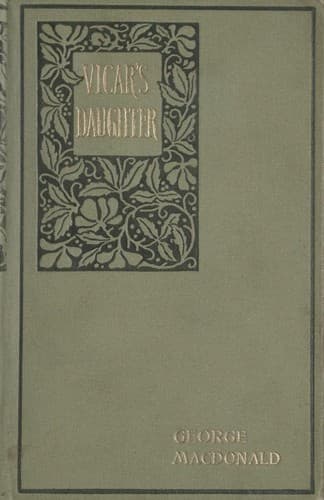
Children of clergy -- Fiction; Christian fiction; Fathers and daughters -- Fiction; Scotland -- Fiction
"Let us leave it for the present, if you please; for while I am nurse, I
must mind my business. Dr. Brand expresses himself quite satisfied with me,
so far as we have gone; and it is better for the children, not to mention
Mrs. Morley, to have some one about them they are used to."
She left the room without waiting further parley.
Dr. Brand, however, not only set Mr. Morley's mind at rest as to her
efficiency, but when a terrible time of anxiety was at length over, during
which one after another, and especially Judy herself, had been in great
danger, assured him that, but for the vigilance and intelligence of Miss
Clare, joined to a certain soothing influence which she exercised over
every one of her patients, he did not believe he could have brought Mrs.
Morley through. Then, indeed, he changed his tone to her, in a measure,
still addressing her as from a height of superiority.
They had recovered so far that they were to set out the next morning for
Hastings, when he thus addressed her, having sent for her once more to the
dining-room:--
"I hope you will accompany them, Miss Clare," he said. "By this time you
must be in no small need of a change yourself."
"The best change for me will be Lime Court," she answered, laughing.
"Now, pray don't drive your goodness to the verge of absurdity," he said
pleasantly.
"Indeed, I am anxious about my friends there," she returned. "I fear they
have not been getting on quite so well without me. A Bible-woman and a
Roman Catholic have been quarrelling dreadfully, I hear."
Mr. Morley compressed his lips. It _was_ annoying to be so much indebted to
one who, from whatever motives, called such people her friends.
"Oblige me, then," he said loftily, taking an envelope from the
mantle-piece, and handing it to her, "by opening that at your leisure."
"I will open it now, if you please," she returned.
It contained a bank-note for a hundred pounds. Mr. Morley, though a hard
man, was not by any means stingy. She replaced it in the envelope, and laid
it again on the chimney-piece.
"You owe me nothing, Mr. Morley," she said.
"Owe you nothing! I owe you more than I can ever repay."
"Then don't try it, please. You are _very_ generous; but indeed I could not
accept it."
"You must oblige me. You _might_ take it from _me_," he added, almost
pathetically, as if the bond was so close that money was nothing between
them.
"You are the last--one of the last I _could_ take money from, Mr. Morley."
"Why?"
"Because you think so much of it, and yet would look down on me the more if
I accepted it."
He bit his lip, rubbed his forehead with his hand, threw back his head, and
turned away from her.
"I should be very sorry to offend you," she said; "and, believe me, there
is hardly any thing I value less than money. I have enough, and could have
plenty more if I liked. I would rather have your friendship than all the
money you possess. But that cannot be, so long as"--
Public-domain text, read in full here on John Shaqi.
Reviews
Reviews
No reviews yet
Be the first to share your thoughts on this work.
Elsewhere in the archive
Join the Discussion
Join the discussion
Sign in to leave a comment or review.
Sign InorCreate an account