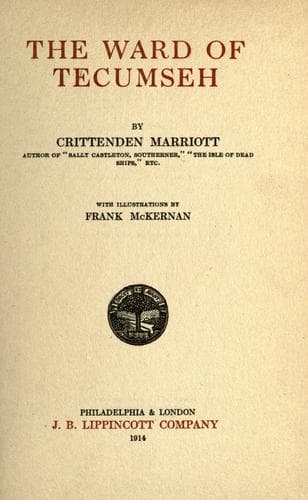
Indians of North America -- Wars -- 1812-1815 -- Fiction; United States -- History -- War of 1812 -- Fiction
THE close of the Revolution had brought no cessation of British
intrigue along the northern frontier. The British did not believe the
confederacy of states would endure. In any event the western frontier
was uncertain; miles upon miles of territory--land enough for a dozen
principalities--lay open to whoever should first grasp it. Treaties
were mere paper; possession was everything. Colonization in western
Canada had always lagged and the British could supply no white barrier
to hold back the resistless tide that was rolling up from the south.
But this very dearth of colonists was in a way an advantage, for
it prevented the pressure on the Indians for lands that had caused
perpetual war further south. Desiring to check the Americans rather
than to advance their own lines the British, through McKee and other
agents, poured out money to win the friendship of the Indians. Arms,
ammunition, provisions, gew-gaws in abundance were always ready. In the
five years before the breaking out of the War of 1812 probably more
than half the Indians about the Great Lakes had visited one British
post or another in Canada and had come back home loaded with presents.
The policy was wise, even if not humane. When the conflict came it was
to save Canada, which without Indian aid would have been lost forever
to the British crown.
South of Canada, within the borders of the United States, ten thousand
Indians hung in the balance, ready to be swayed by a hair. They were
friendly to the British, and they hated the Americans. But they feared
them, also--feared the men who had fought and bled and died as they
forced their way westward past all resistance. Some would go north at
the first word of war, but most would stay quiet, awaiting results.
The first British triumph, however small, would call hundreds of them
to the British standard; a great British triumph would call them forth
in thousands.
Tecumseh was the head and front of those Indians who favored war.
For years he had urged that the red men should unite in one great
league and should establish a line beyond which the white man must not
advance. Behind this, no foot of land was to be parted with without the
unanimous consent of all the tribes. Two long journeys had he made,
travelling swiftly, tireless as a wolf, from one tribe to another,
from Illinois to Virginia, from Florida to New York, welding all red
men into a vast confederacy that in good time would rise against the
ever-aggressive white man, crush his outposts, sweep back his lines,
and establish a great Indian empire that would hold him back forever.
Public-domain text, read in full here on John Shaqi.
Reviews
Reviews
No reviews yet
Be the first to share your thoughts on this work.
Join the Discussion
Join the discussion
Sign in to leave a comment or review.
Sign InorCreate an account