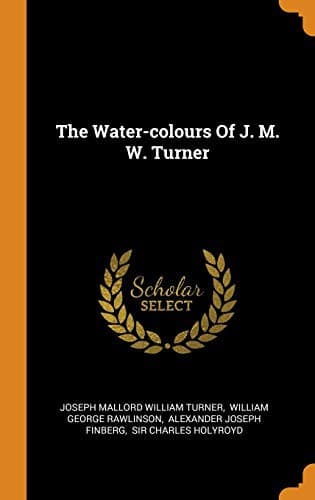
The Water-Colours of J. M. W. TurnerFinberg, A. J. (Alexander Joseph)
General
The Water-Colours of J. M. W. Turner
Finberg, A. J. (Alexander Joseph)
Turner, J. M. W. (Joseph Mallord William), 1775-1851; Watercolor painting, British
What first strikes one in his drawings, apart from their technical
skill, is their _individuality_; they always stand out amongst the work
of other artists, however great. The chief cause of this is hard to
define, but I should say that it is that they almost invariably possess
a certain quality of imaginativeness, of what is termed ‘poetry.’ No
matter how simple was his subject, he instinctively saw it from its most
beautiful, its most romantic side. If it had little or no beauty or
romance of its own, he would still throw an indefinable charm round it
by some gleam of light, some veiling mist, some far-away distance, some
alluring sense of mystery, of ‘infinity.’ And Turner was a true poet,
although he had little enough of the look or the manners of one.
Throughout his life he was a reader and a voluminous writer of poetry,
but his want of education debarred him from ever expressing himself
coherently in verse. The same cause, together with his lack of a sense
of humour, interfered also with the perfect expression of his art,
especially in his classical and religious pictures, and prevented him
from seeing what was incongruous or at times unpleasing in them. But
only a poet deep-down could have won as he did from Nature her most
intimate secrets; could so have caught and so inimitably have portrayed
her every mood and charm.
And it is this impress of his deep love for the beauty and the grandeur
of Nature--a love as strong as Wordsworth’s, as intense as
Shelley’s--which is perhaps the greatest cause of the enduring
attractiveness of Turner’s work. Without it, he would never have toiled
as he did all his life, from dawn to dark, year in and year out,
observing and recording in those nineteen thousand studies every kind of
natural scenery, every changing contour of mist and cloud, every
differing form and structure of tree, every movement or reflection in
water, every transient effect of light, storm, wind or weather.
Public-domain text, read in full here on John Shaqi.
Reviews
Reviews
No reviews yet
Be the first to share your thoughts on this work.
Join the Discussion
Join the discussion
Sign in to leave a comment or review.
Sign InorCreate an account