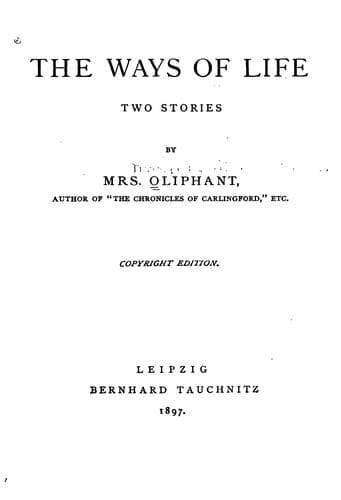
The Ways of Life: Two StoriesOliphant, Mrs. (Margaret)
General
The Ways of Life: Two Stories
Oliphant, Mrs. (Margaret)
Fiction
good for anything, only one piece of lumber the more, the most valueless
of all.
He paused, and tried to say to himself that this was morbid. But it was
not morbid, it was true. With that curious hurrying of the thoughts
which a great calamity brings about, he had already glimpsed everything,
seeing the whole situation and all that was involved. There was a
certain sum of money in the bank, no more anywhere, except after his own
death. There were his insurances, a little for every one, enough, he had
hoped, though in a much changed and subdued manner, to support his wife
and the girls, enough for that daily bread of which he had been
thinking; but it could not be had till he died; and that was all. There
was nothing, nothing more; nothing to live upon, nothing to turn to. If
you have losses, if your income is reduced, you can retrench and
diminish your expenses. But when everything is cut off in a moment, when
you have no income at all? such utter loss paralyses the unfortunate.
He stood in his studio with a sort of vague smile upon his face, and
something of the imbecility of utter helplessness taking possession of
him. Everything cut off. Nothing to turn to. Vague visions passed
through his mind of the expenses of that seaside house, for instance,
which could not be got rid of now; of Lizzie’s fifty pounds a year which
he had promised not without forebodings; of Jack’s fee of two guineas
which the children had all made so merry about; of the easy course of
their existence, their life, which was so blameless, so innocent, so
kind: they were all ready to give, ready to be hospitable; none of the
family could see another in want and not eagerly offer what they had.
Good God! and to think they had nothing, nothing! It was not a question
of enough, it was that there was nothing; that all the streams were
closed, and all the doors shut, and the successful man, with his large
income, had suddenly become like a navvy out of work, like a dock
labourer, or whatever was most pitifully unprovided for in the world.
Public-domain text, read in full here on John Shaqi.
Reviews
Reviews
No reviews yet
Be the first to share your thoughts on this work.
Join the Discussion
Join the discussion
Sign in to leave a comment or review.
Sign InorCreate an account