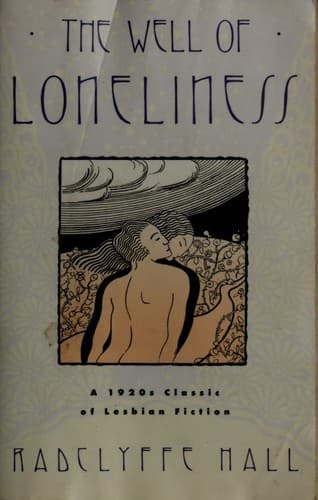
Lesbians -- England -- Social conditions -- Fiction
Sometimes, having dined, they would saunter towards home through streets
that were crowded with others who sauntered—men and women, a couple of
women together—always twos—the fine nights seemed prolific of couples.
In the air there would be the inconsequent feeling that belongs to the
night life of most great cities, above all to the careless night life of
Paris, where problems are apt to vanish with sunset. The lure of the
brightly lighted boulevards, the lure of the dim and mysterious
bystreets would grip them so that they would not turn homeward for quite
a long while, but would just go on walking. The moon, less clear than at
Orotava, less innocent doubtless, yet scarcely less lovely, would come
sailing over the Place de la Concorde, staring down at the dozens of
other white moons that had managed to get themselves caught by the
standards. In the cafés would be crowds of indolent people, for the
French who work hard know well how to idle; and these cafés would smell
of hot coffee and sawdust, of rough, strong tobacco, of men and women.
Beneath the arcades there would be the shop windows, illuminated and
bright with temptation. But Mary would usually stare into Sulka’s,
picking out scarves or neckties for Stephen.
‘That one! We’ll come and buy it to-morrow. Oh, Stephen, do wait—look
at that dressing-gown!’
And Stephen might laugh and pretend to be bored, though she secretly
nurtured a weakness for Sulka’s.
Down the Rue de Rivoli they would walk arm in arm, until turning at
last, they would pass the old church of St. Germain—the church from
whose Gothic tower had been rung the first call to a most bloody
slaying. But now that tower would be grim with silence, dreaming the
composite dreams of Paris—dreams that were heavy with blood and beauty,
with innocence and lust, with joy and despair, with life and death, with
heaven and hell; all the curious composite dreams of Paris.
Then crossing the river they would reach the Quarter and their house,
where Stephen would slip her latchkey into the door and would know the
warm feeling that can come of a union between door and latchkey. With a
sigh of contentment they would find themselves at home once again in the
quiet old Rue Jacob.
3
They went to see the kind Mademoiselle Duphot, and this visit seemed
momentous to Mary. She gazed with something almost like awe at the woman
who had had the teaching of Stephen.
‘Oh, but yes,’ smiled Mademoiselle Duphot, ‘I teached her. She was
terribly naughty over her dictée; she would write remarks about the poor
Henri—très impertinente she would be about Henri! Stévenne was a queer
little child and naughty—but so dear, so dear—I could never scold her.
With me she done everything her own way.’
‘Please tell me about that time,’ coaxed Mary.
Public-domain text, read in full here on John Shaqi.
Reviews
Reviews
No reviews yet
Be the first to share your thoughts on this work.
Elsewhere in the archive
Join the Discussion
Join the discussion
Sign in to leave a comment or review.
Sign InorCreate an account