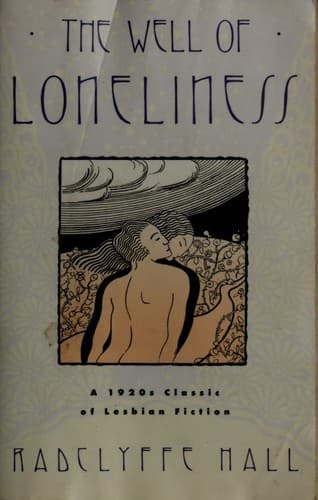
Lesbians -- England -- Social conditions -- Fiction
Oh, but the spring was shouting through Paris! It was in the hearts and
the eyes of the people. The very dray-horses jangled their bells more
loudly because of the spring in their drivers. The debauched old taxis
tooted their horns and spun round the corners as though on a race track.
Even such glacial things as the diamonds in the Rue de la Paix, were
kindled to fire as the sun pierced their facets right through to their
entrails; while the sapphires glowed as those African nights had glowed
in the garden at Orotava.
Was it likely that Stephen could finish her book—she who had Paris in
springtime with Mary? Was it likely that Mary could urge her to do
so—she who had Paris in springtime with Stephen? There was so much to
see, so much to show Mary, so many new things to discover together. And
now Stephen felt grateful to Jonathan Brockett who had gone to such
pains to teach her her Paris.
Idle she was, let it not be denied, idle and happy and utterly carefree.
A lover, who, like many another before her, was under the spell of the
loved one’s existence. She would wake in the mornings to find Mary
beside her, and all through the day she would keep beside Mary, and at
night they would lie in each other’s arms—God alone knows who shall
dare judge of such matters; in any case Stephen was too much bewitched
to be troubled just then by hair-splitting problems.
Life had become a new revelation. The most mundane things were invested
with glory; shopping with Mary who needed quite a number of dresses. And
then there was food that was eaten together—the careful perusal of
wine-card and menu. They would lunch or have dinner at Lapérouse; surely
still the most epicurean restaurant in the whole of an epicurean city.
So humble it looks with its modest entrance on the Quai des Grands
Augustins; so humble that a stranger might well pass it by unnoticed,
but not so Stephen, who had been there with Brockett.
Mary loved Prunier’s in the Rue Duphot, because of its galaxy of
sea-monsters. A whole counter there was of incredible
creatures—Oursins, black armoured and covered with prickles;
Bigorneaux; serpent-like Anguilles Fumées; and many other exciting
things that Stephen mistrusted for English stomachs. They would sit at
their own particular table, one of the tables upstairs by the window,
for the manager came very quickly to know them and would smile and bow
grandly: ‘Bon jour, mesdames.’ When they left, the attendant who kept
the flower-basket would give Mary a neat little bouquet of roses: ‘Au
revoir, mesdames. Merci bien—à bientôt!’ For every one had pretty
manners at Prunier’s.
A few people might stare at the tall, scarred woman in her well-tailored
clothes and black slouch hat. They would stare first at her and then at
her companion: ‘Mais regardez moi ça! Elle est belle, la petite; comme
c’est rigolo!’ There would be a few smiles, but on the whole they would
attract little notice—ils en ont vu bien d’autres—it was post-war
Paris.
Public-domain text, read in full here on John Shaqi.
Reviews
Reviews
No reviews yet
Be the first to share your thoughts on this work.
Elsewhere in the archive
Join the Discussion
Join the discussion
Sign in to leave a comment or review.
Sign InorCreate an account