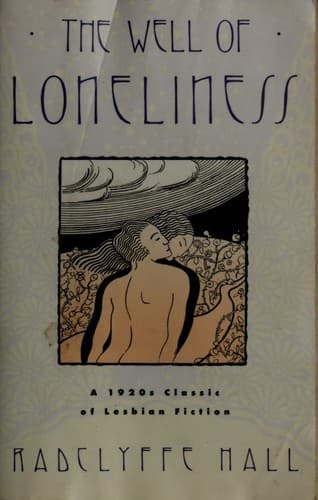
Lesbians -- England -- Social conditions -- Fiction
They soon settled down to their more prosaic days very much as quite
ordinary people will do. Each of them now had her separate
tasks—Stephen her writing, and Mary the household, the paying of bills,
the filing of receipts, the answering of unimportant letters. But for
her there were long hours of idleness, since Pauline and Pierre were
almost too perfect—they would smile and manage the house their own way,
which it must be admitted was better than Mary’s. As for the letters,
there were not very many; and as for the bills, there was plenty of
money—being spared the struggle to make two ends meet, she was also
deprived of the innocent pleasure of scheming to provide little happy
surprises, little extra comforts for the person she loved, which in
youth can add a real zest to existence. Then Stephen had found her
typing too slow, so was sending the work to a woman in Passy; obsessed
by a longing to finish her book, she would tolerate neither let nor
hindrance. And because of their curious isolation, there were times when
Mary would feel very lonely. For whom did she know? She had no friends
in Paris except the kind Mademoiselle Duphot and Julie. Once a week, it
is true, she could go and see Buisson, for Stephen continued to keep up
her fencing; and occasionally Brockett would come strolling in, but his
interest was centred entirely in Stephen; if she should be working, as
was often the case, he would not waste very much time over Mary.
Stephen often called her into the study, comforted by the girl’s loving
presence. ‘Come and sit with me, sweetheart, I like you in here.’ But
quite soon she would seem to forget all about her. ‘What . . . what?’
she would mutter, frowning a little. ‘Don’t speak to me just for a
minute, Mary. Go and have your luncheon, there’s a good child; I’ll come
when I’ve finished this bit—you go on!’ But Mary’s meal might be eaten
alone; for meals had become an annoyance to Stephen.
Of course there was David, the grateful, the devoted. Mary could always
talk to David, but since he could never answer her back the conversation
was very one-sided. Then too, he was making it obvious that he, in his
turn, was missing Stephen; he would hang around looking discontented
when she failed to go out after frequent suggestions. For although his
heart was faithful to Mary, the gentle dispenser of all salvation, yet
the instinct that has dwelt in the soul of the male, perhaps ever since
Adam left the Garden of Eden, the instinct that displays itself in club
windows and in other such places of male segregation, would make him
long for the companionable walks that had sometimes been taken apart
from Mary. Above all would it make him long intensely for Stephen’s
strong hands and purposeful ways; for that queer, intangible something
about her that appealed to the canine manhood in him. She always allowed
him to look after himself, without fussing; in a word, she seemed
restful to David.
Public-domain text, read in full here on John Shaqi.
Reviews
Reviews
No reviews yet
Be the first to share your thoughts on this work.
Elsewhere in the archive
Join the Discussion
Join the discussion
Sign in to leave a comment or review.
Sign InorCreate an account