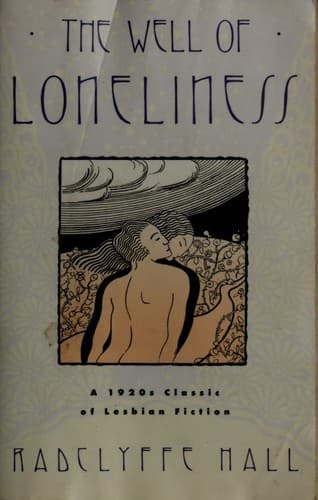
Lesbians -- England -- Social conditions -- Fiction
These two had been lovers from the days of their childhood, from the
days when away in their Highland village the stronger child had
protected the weaker at school or at play with their boisterous
companions. They had grown up together like two wind-swept saplings on
their bleak Scottish hill-side so starved of sunshine. For warmth and
protection they had leaned to each other, until with the spring, at the
time of mating, their branches had quietly intertwined. That was how it
had been, the entwining of saplings, very simple, and to them very dear,
having nothing mysterious or strange about it except inasmuch as all
love is mysterious.
To themselves they had seemed like the other lovers for whom dawns were
brighter and twilights more tender. Hand in hand they had strolled down
the village street, pausing to listen to the piper at evening. And
something in that sorrowful, outlandish music would arouse the musical
soul in Jamie, so that great chords would surge up through her brain,
very different indeed from the wails of the piper, yet born of the same
mystic Highland nature.
Happy days; happy evenings when the glow of the summer lingered for
hours above the grim hills, lingered on long after the flickering lamps
had been lit in the cottage windows of Beedles. The piper would at last
decide to go home, but they two would wander away to the moorland, there
to lie down for a space side by side among the short, springy turf and
the heather.
Children they had been, having small skill in words, or in life, or in
love itself for that matter. Barbara, fragile and barely nineteen; the
angular Jamie not yet quite twenty. They had talked because words will
ease the full spirit; talked in abrupt, rather shy broken phrases. They
had loved because love had come naturally to them up there on the soft,
springy turf and the heather. But after a while their dreams had been
shattered, for such dreams as theirs had seemed strange to the village.
Daft, the folk had thought them, mouching round by themselves for hours,
like a couple of lovers.
Barbara’s grand-dame, an austere old woman with whom she had lived since
her earliest childhood—Barbara’s grand-dame had mistrusted this
friendship. ‘I dinna richtly unnerstan’ it,’ she had frowned; ‘her and
that Jamie’s unco throng. It’s no richt for lass-bairns, an’ it’s no
proaper!’
And since she spoke with authority, having for years been the village
post-mistress, her neighbours had wagged their heads and agreed. ‘It’s
no richt; ye hae said it, Mrs. MacDonald!’
Public-domain text, read in full here on John Shaqi.
Reviews
Reviews
No reviews yet
Be the first to share your thoughts on this work.
Elsewhere in the archive
Join the Discussion
Join the discussion
Sign in to leave a comment or review.
Sign InorCreate an account