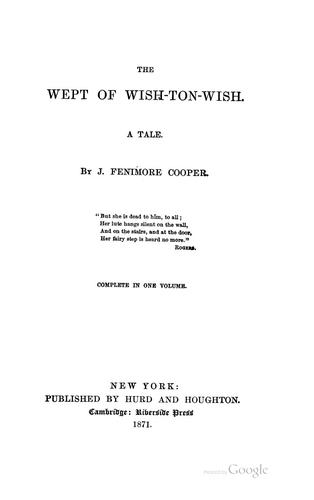
Historical fiction; King Philip's War, 1675-1676 -- Fiction; War stories
"Thou distrustest me, or thou dost injustice to thine own belief,"
interrupted the Puritan, with a smile, that shone on his haggard and
austere visage, as the rays of the setting sun light a wintry cloud
"Seemed I happier when this hand placed that of a loved bride into mine
own, than thou now seest me in this wilderness, houseless, stripped of my
wealth, and, God forgive the ingratitude! but I had almost said,
childless? No, indeed, thou mayest not tarry, for the blood-hounds of
tyranny will be on their scent: here is shelter no longer."
The eyes of both turned, by a common and melancholy feeling, towards the
ruin of the block. The stranger then pressed the hand of his friend in
both his own, and said in a struggling voice--
"Mark Heathcote, adieu! he that had a roof for the persecuted
wanderer shall not long be houseless: neither shall the resigned for
ever know sorrow."
His words sounded in the ears of his companion like the revelation of a
prophecy. They again pressed their hands together, and, regarding each
other with looks in which kindness could not be altogether smothered by
the repulsive character of an acquired air, they parted. The Puritan
slowly took his way to the dreary shelter which covered his family; while
the stranger was shortly after seen urging the beast he had mounted,
across the pastures of the valley, towards one of the most retired paths
of the wilderness.
Chapter XVII.
"Together towards the village then we walked,
And of old friends and places much we talked:
And who had died, who left them, would he tell;
And who still in their father's mansion dwell."
Dana
We leave the imagination of the reader to supply an interval of several
years. Before the thread of the narrative shall be resumed, it will be
necessary to take another hasty view of the condition of the country in
which the scene of our legend had place.
The exertions of the provincials were no longer limited to the first
efforts of a colonial existence. The establishments of New-England had
passed the ordeal of experiment, and were become permanent. Massachusetts
was already populous; and Connecticut, the colony with which we have more
immediate connexion, was sufficiently peopled to manifest a portion of
that enterprise which has since made her active little community so
remarkable. The effects of these increased exertions were becoming
extensively visible; and we shall endeavor to set one of these changes, as
distinctly as our feeble powers will allow, before the eyes of those who
read these pages.
Public-domain text, read in full here on John Shaqi.
Reviews
Reviews
No reviews yet
Be the first to share your thoughts on this work.
Elsewhere in the archive
Join the Discussion
Join the discussion
Sign in to leave a comment or review.
Sign InorCreate an account