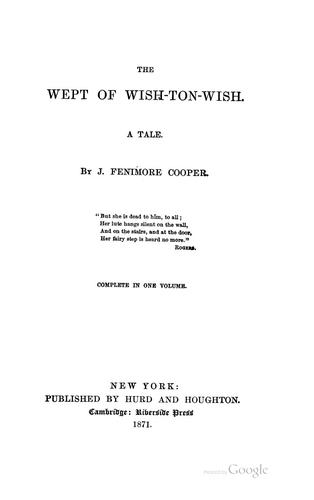
Historical fiction; King Philip's War, 1675-1676 -- Fiction; War stories
some further manifestation of thy will, that we may know whether the
fountains of our affection shall be dried in the certainty of her
blessedness--" (scalding tears were rolling down the cheeks of the pallid
and immovable mother) "or whether hope, nay, whether duty to thee calleth
for the interference of those bound to her in the tenderness of the flesh.
When the blow was heaviest on the bruised spirit of a lone and solitary
wanderer, in a strange and savage land, he held not back the offspring it
was thy will to grant him in the place of her called to thyself; and now
that the child hath become a man, he too layeth, like Abraham of old, the
infant of his love, a willing offering at thy feet. Do with it as to thy
never-failing wisdom seemeth best."--The words were interrupted by a heavy
groan, that burst from the chest of Content. A deep silence ensued, but
when the assembly ventured to throw looks of sympathy and awe at the
bereaved father, they saw that he had arisen and stood gazing steadily at
the speaker, as if he wondered, equally with the others, whence such a
sound of suffering could have come. The Puritan renewed the subject, but
his voice faltered, and for an instant, as he proceeded, his hearers were
oppressed with the spectacle of an aged and dignified man shaken with
grief. Conscious of his weakness, the old man ceased speaking in
exhortation, and addressed himself to prayer. While thus engaged, his
tones again became clear, firm and distinct, and the petition was ended
in the midst of a deep and holy calm.
With the performance of this preliminary office, the simple ceremony was
brought to its close. The remains were lowered, in solemn silence, into
the grave, and the earth was soon replaced by the young men. Mark
Heathcote then invoked aloud the blessing of God on his household, and
bowing in person, as he had before done in spirit, to the will of Heaven,
he motioned to the family to withdraw.
The interview that succeeded was over the resting-place of the dead. The
hand of the stranger was firmly clenched in that of the Puritan, and the
stern self-command of both appeared to give way, before the regrets of a
friendship that had endured through so many trying scenes.
"Thou knowest that I may not tarry," said the former, as if he replied to
some expressed wish of his companion. "They would make me a sacrifice to
the Moloch of their vanities; and yet would I fain abide, until the weight
of this heavy blow may be forgotten. I found thee in peace, and I quit
thee in the depths of suffering!"
Public-domain text, read in full here on John Shaqi.
Reviews
Reviews
No reviews yet
Be the first to share your thoughts on this work.
Elsewhere in the archive
Join the Discussion
Join the discussion
Sign in to leave a comment or review.
Sign InorCreate an account