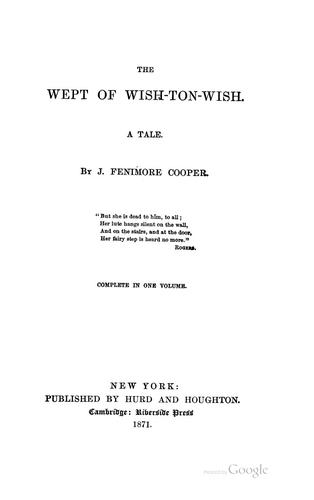
Historical fiction; King Philip's War, 1675-1676 -- Fiction; War stories
The family of Meek preceded him into the temple, and when the feet of the
minister himself crossed its threshold, there was no human form visible
without its walls. The bell ceased its monotonous and mournful note, and
the tall, gaunt form of the divine moved through the narrow aisle to its
usual post, with the air of one who had already more than half rejected
the burthen of bodily encumbrance. A searching and stern glance was thrown
around, as if he possessed an instinctive power to detect all delinquents;
and then seating himself, the deep stillness, that always preceded the
exercises, reigned in the place.
When the divine next showed his austere countenance to his expecting
people, its meaning was expressive rather of some matter of worldly
import, than of that absence of carnal interest with which he usually
strove to draw near to his Creator in prayer.
"Captain Content Heathcote," he said with grave severity, after permitting
a short pause to awaken reverence, "there has one ridden through this
valley on the Lord's day, making thy habitation his halting-place. Hath
the traveller warranty for this disrespect of the Sabbath, and canst thou
find sufficient reason in his motive, for permitting the stranger within
thy gates to neglect the solemn ordinance delivered on the mount?"
"He rideth on especial commission," answered
Content, who had respectfully arisen, when thus addressed by name; "for
matter of grave interest to the well-being of the Colony is contained in
the subject of his errand."
"There is nought more deeply connected with the well-being of man, whether
resident in this Colony or in more lofty empires, than reverence to God's
declared will," returned Meek, but half-appeased by the apology. "It would
have been expedient for one, who, in common, not only setteth so good an
example himself, but who is also charged with the mantle of authority, to
have looked with distrust into the pretences of a necessity that may be
only seeming."
"The motive shall be declared to the people, at a fitting moment; but it
hath seemed more wise to retain the substance of the horseman's errand,
until worship hath been offered, without the alloy of temporal concerns."
"Therein hast thou acted discreetly; for a divided mind giveth but little
joy above. I hope there is equal reason why all of thy household are not
with thee in the temple?"
Public-domain text, read in full here on John Shaqi.
Reviews
Reviews
No reviews yet
Be the first to share your thoughts on this work.
Elsewhere in the archive
Join the Discussion
Join the discussion
Sign in to leave a comment or review.
Sign InorCreate an account