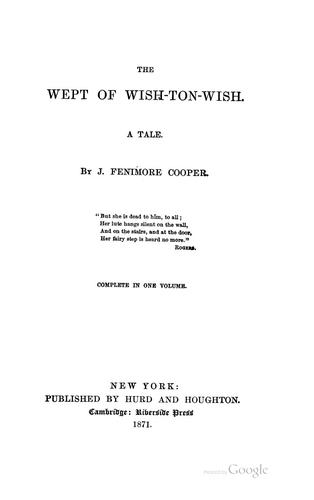
Historical fiction; King Philip's War, 1675-1676 -- Fiction; War stories
But the dwelling, the out-buildings, and all the implements of domestic
comfort, which had so lately contributed to the ease of the Heathcotes,
were completely in the possession of the Indians. The open shutters and
doors, the scattered and half-destroyed furniture, the air of devastation
and waste, and the general abandonment of all interest in the protection
of the property, proclaimed the licentious disorder of a successful
assault. Still the work of destruction and plunder did not go on.
Although here and there might be seen some warrior, decorated, according
to the humors of his savage taste, with the personal effects of the
former inmates of the building, every hand had been checked, and the
furious tempers of the conquerors had been quieted, seemingly by the
agency of some unseen and extraordinary authority. The men, who so lately
had been moved by the fiercest passions of our nature, were suddenly
restrained if not appeased; and, instead of that exulting indulgence of
vengeance which commonly accompanies an Indian triumph, the warriors
stalked about the buildings and through the adjacent grounds, in a
silence which, though gloomy and sullen, was marked by their
characteristic submission to events.
The principal leaders of the inroad, and all the surviving sufferers by
the defeat, were assembled in the piazza of the dwelling. Ruth, pale,
sorrowing, and mourning for others rather than for herself, stood a little
apart, attended by Martha and the young assistant, whose luckless fortune
it was to be found at her post, on this eventful day. Content, the
stranger, and Mark, were near, subdued and bound, the sole survivors of
all that band they had so recently led into the conflict. The gray hairs
and bodily infirmities of the Puritan spared him the same degradation. The
only other being present, of European origin, was Whittal Ring. The
innocent stalked slowly among the prisoners, sometimes permitting ancient
recollections and sympathies to come over his dull intellect, but oftener
taunting the unfortunate with the injustice of their race, and with the
wrongs of his adopted people.
The chiefs of the successful party stood in the centre, apparently engaged
in some grave deliberation. As they were few in number, it was evident
that the council only included men of the highest importance. Chiefs of
inferior rank, but of great names in the limited renown of those simple
tribes, conversed in knots among the trees, or paced the court at a
respectful distance from the consultation of their superiors.
Public-domain text, read in full here on John Shaqi.
Reviews
Reviews
No reviews yet
Be the first to share your thoughts on this work.
Elsewhere in the archive
Join the Discussion
Join the discussion
Sign in to leave a comment or review.
Sign InorCreate an account