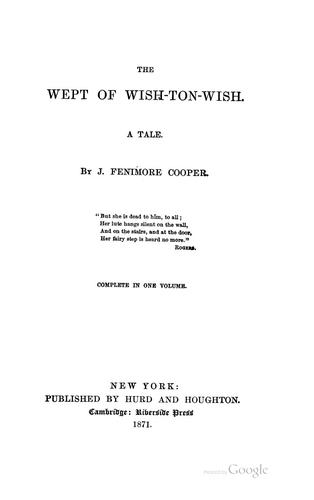
Historical fiction; King Philip's War, 1675-1676 -- Fiction; War stories
"A sight that his eyes will not believe. He sees a great tribe on the
war-path. There are many braves, and a chief whose fathers came from the
clouds. Their hands are in the air; they strike heavy blows; the arrow is
swift, and the bullet is not seen to enter, but it kills. Blood runs from
the wounds that is of the color of water. Now he does not see, but he
hears! 'Tis the scalp-whoop, and the warriors are very glad. The chiefs in
the happy hunting-grounds are coming, with joy, to meet Indians that are
killed; for they know the scalp-whoop of their children."
The expressive countenance of the young Sachem involuntarily responded to
this description of the scene through which he had just passed; and it was
impossible for one so tutored, to prevent the blood from rushing faster to
a heart that ever beat strongly with the wishes of a warrior.
"What sees my father, next?" he asked, triumph insensibly stealing into
the tones of his voice.
"A Messenger--and then he hears--the moccasons of squaws!"
"Enough;--Metacom, the women of the Narragansetts have no lodges. Their
villages are in coals, and they follow the young men for food."
"I see no deer. The hunter will not find venison in a clearing of the
Pale-faces. But the corn is full of milk; Conanchet is very hungry; he
hath sent for his woman, that he may eat!"
The fingers of that hand, which grasped the handle of the tomahawk,
appeared to bury themselves in the wood; the glittering axe itself was
slightly raised; but the fierce gleaming of resentment subsided, as the
anger of the young Sachem vanished, and a dignified calm again settled on
his countenance.
"Go, Wampanoag," he said, waving a hand proudly, as if determined to be no
longer harassed by the language of his wily associate. "My young men will
raise the whoop, when they hear my voice; and they will kill deer for
their women. Sachem, my mind is my own."
Philip answered to the look which accompanied these words, with one that
threatened vengeance; but smothering his anger, with his accustomed
wisdom, he left the hill, assuming an air that affected more of
commiseration than of resentment.
"Why has Conanchet sent for a woman from the woods?" repeated the same
soft voice, nearer to the elbow of the young Sachem, and which spoke with
less of the timidity of the sex, now that the troubled spirit of the
Indians of those regions had disappeared.
Public-domain text, read in full here on John Shaqi.
Reviews
Reviews
No reviews yet
Be the first to share your thoughts on this work.
Elsewhere in the archive
Join the Discussion
Join the discussion
Sign in to leave a comment or review.
Sign InorCreate an account